Would you hire a blind babysitter?

I have the same nightmares other parents do. When my daughter was three, I had a nightmare about her running out in front of a truck at night with her purple coat on and being hit. I got rid of that coat and I was paranoid about her being near roads after dark for at least a year after that. 

But I have a special nightmares too--those involving newspaper headlines. And that's not because I've been a journalist (except possibly because my brain knows all to well how the media works). My nightmare headlines say things like:  "Child drowns in river while blind mother is oblivious" or "Community shocked to learn mother of hit-and-run victim couldn't see the car coming."

Because there are a few facts are simply unavoidable:

  1. A few children will die or be horribly injured in tragic accidents ever year.
  2. Some of these accidents are due to parental neglect. Many are not. Helicopter parents are not all that much less likely to lose their child to a terrible accident. 
  3. Most people, including most journalists, wouldn't think a blind person could safely keep track of a toddler.
  4. I'm legally blind and I have two young children.

On number 3, I know this because blind parents who go out in public with a white cane and small children all get asked the same questions over and over again, such as "Why did you get pregnant and risk passing that on to your child?" and then "Aren't you afraid they'll get hurt if you aren't looking?" I've been on the receiving end of those questions and I know plenty of other visually impaired parents who've heard them too.

That's why I have extra nightmares. The irony is that I am not really worried that my vision impairment could specifically cause me to miss preventing an accident.

Here is just one example of why I think my kids are just as safe (and as unsafe) as any others:

When our daughter was two and a half, we adopted our second child. He was ten months old and he was extremely emotionally needy due to experiences in a not-particularly-progressive orphanage. As a result, our daughter became a bit more independent. 

A few weeks after we brought our son home, we went to a park by a river for a picnic. It was early in the day and there was no one else there. Our daughter was playing by a tributary stream, throwing pebbles into the water; my husband was reading a book; and I was changing the baby's diaper under a shade tree. I mentioned to my husband that he really needed to watch our daughter if she was going to play close to the river and he assured me that he could see her while he read. I don't have a real concrete idea of how fully sighted eyes work, so I accepted this, though I've since been told it isn't really possible. 

I remember looking up and catching a glimpse of the blur of my daughter's white shirt near the stream a few times. I can't see much beyond about ten feet, but I can pick out bright contrasts of color. Still, I was nervous. I didn't know why at the time, though I have since realized that I was subconsciously uneasy because the noise of the river made it so that I couldn't hear what my daughter was doing, which is how I normally keep track of her.

Once I looked up and didn't see her white shirt by the stream. I looked around and saw the splotch of white on the other side of me, about twenty feet away, near the steep river bank. My husband was facing that way though and I thought he was watching, so I went back to changing the diaper.

She ran back and forth between the stream and the river several times. There were bushes and trees around as well. If I had looked up and not seen her, I wouldn't have panicked. My husband later said he felt the same way, except that he wasn't on edge at all. He was reading his book and casually glancing up and down from it to keep track of our daughter's whereabouts. 

When I had  finished with the diapering process, I started  putting stuff back into our backpack. I happened to be looking up, watching our daughter by the river in a relaxed, summertime way.

And then she disappeared. 

It was silent. Or at least I couldn't hear a sound over the rush of the river. Not a splash. Not a scream. Not a peep. The splotch of her shirt was just there one second and then gone.

I leaped up, left the baby laying on the blanket and raced across the grass. Right by the  river, I could hear her flailing in the water. It was so cold that she couldn't scream. She had already been carried downstream a few feet by the strong current and was now hidden by bushes. I jumped into the river and had her in my arms in the space of three heartbeats. My husband was still putting down his book, looking dazed and alarmed, when I scrambled back to the bank. 

What did I learn from this experience:

  1. Children can fall into a river much more quickly and unobtrusively than new parents usually think.
  2. If children are by a river, an adult needs to be paying full attention at all times. 
  3. If there is more than one adult, there needs to be a designated person to pay attention to children by water because relying on the idea that more adults will mean enough safety doesn't cut it.
  4. Sighted people often take their ability to see where a child is for granted.
  5. Being fully sighted isn't necessarily a great advantage in this situation.

We discussed this (at length) later. My husband agrees that if he had looked up and not seen our daughter by the river, he would have looked over by the stream. If he had still not seen her, he would have gotten up and gone to look behind the bushes by the stream. By the time, he determined that she wasn't there, at least 30 seconds would have passed and she would have been swept well downstream in the swiftly flowing river. She fell where she was immediately out of his line of sight, obscured by the bank and dense brush.

Parenting 101: We weren't close enough and neither of us was paying enough attention. It was only because I happened to be looking directly at her that disaster was averted. Overconfidence in one sense is dangerous.

I have learned a lot since then and I know many experienced parents (both sighted and blind) who know better than to make those mistakes in the first place. You don't have to be a helicopter parent to know that toddlers and swift water are a bad combination. 

Since then I have learned a lot about how blind parents do what they do as well. Under normal circumstances, I can hear very precisely what toy my children are playing with in the other room and what they're doing with it. They have asked me, when they got in trouble for messing with forbidden items, "Mama, how did you know?" For now, I just let them think Mama has eyes in the back of her head, because... these are trade secrets. 

But I also know what I can't see. If I'm with small children by a river without other adults, I will be physically right with the children. I won't be watching from a distance, if the water is noisy. This comes from experience of children and flowing water more than anything and my approach wouldn't be that different even if I was fully sighted. I know how easily accidents can happen.

A few years ago, a family member told me that I couldn't be safe watching small children because of my vision impairment. As it happened, a year later I was put in the situation of watching that relative's child plus my two children by a river alone for two hours. I had agreed to watch the three children by myself in that situation for only fifteen minutes. But the person who was supposed to arrive to help me, didn't show up for some time. And it turned into two hours.

That time, everything went fine, but I was still stressed out. I am reasonably confident that I can watch children by water, but three preschoolers on one adult (at a swimming hole where a child drowned the year before) isn't a great ratio in general. And this was made worse by the doubts some relatives had already expressed about my ability to watch children. I was uncomfortable with this situation because I knew that if a child slipped on a wet rock, I wouldn't be judged the way other parents are judged. I am inherently suspect.

That's where the nightmares about newspaper headlines come in. As much as I'm afraid of my children or other children I care for being hurt, I'm also nervous about the community wrath and lack of understanding that is likely to result if my child even suffers a common childhood injury.

In the light of the neon fact that I'm legally blind, some other facts that might well be overlooked. Those are:

  1. My children have never broken a bone or been to the Emergency Room... yet. (Lucky dog. Could happen, just hasn't yet.)
  2. My concerned relative's child has... both things, several times. (Not an extremely risky lifestyle. It just happens, but no one ascribes any special meaning to it because this parent has no disability.)
  3. I taught preschool-aged children for ten years and never had a safety problem.
  4. I've pulled a silently drowning child out of a swimming pool twice when no one happened to be looking. The first time I did it, I was twelve. (And, yes, I was legally blind then too.)
  5. I am as careful or more careful than other parents when it comes to dangers like water and traffic without restricting children's play.

 It's never fun to know that you might be judged more harshly than others if you make a mistake. Granted, sometimes that's just life. But this prejudice raises other issues as well. Many parents won't let their children come to my house for a playdate. Might that be because they are nervous about the same things? What happens if someone brings up these kinds of issues in a custody hearing? What if a legally blind person wants to work as a preschool teacher?

I've discussed these issues with skeptical parents a lot, and it has often come down to a deceivingly simple question:

Would you hire a legally blind babysitter?
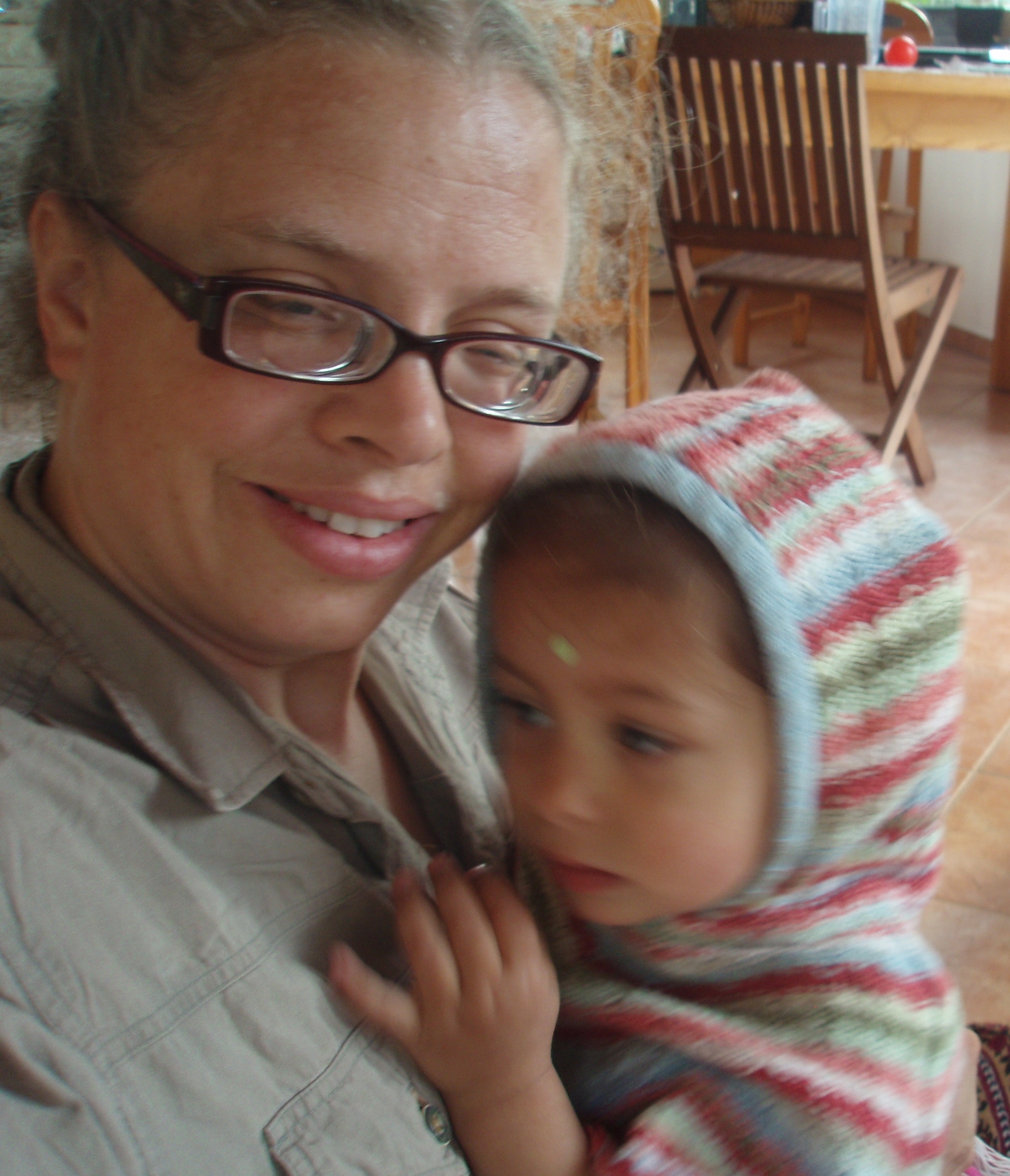
Believe it or not, I worked as a babysitter as a teenager. I'm not sure if the parents knew I was legally blind. My career wasn't very illustrious anyway... but for other reasons. One set of parents came home to find me leading their children on an adventurous expedition on their shed roof. If I hired a babysitter who did that today, there would be stern words.

And so it comes down to this. I'm not saying you should hire a "blind babysitter" because blind people always make great parents and childcare professionals. I am saying, hire a babysitter with a good track record, period. 

If he or she doesn't have a reference--not even from their own cousin or aunt who has kids, then I probably wouldn't hire that babysitter, unless I know them well personally and was prepared to be that first reference. (I'd also be careful of babysitters who take children on hikes on the shed roof, even if they might mature into good parents someday.) 

If you ran into an experience babysitter who has an excellent track record and references and also happens to have a disability, would you hire them? Does it depend on which disability they have? Do you have any chilling tales of water hazards to share? I love to hear from you. Comment below using the bubble icon on the lower left. Share this post using the icon on the lower right.

Five skills that are more important than "a good attitude"

I sometimes like to rant about the insensitive questions people ask about disabilities or blindness. But there is one question I recently got on an international forum, which is actually a good question that often gets bad answers:

What skills are most important for a disabled person to have? 

Creative commons image by Andrea Pavanello, Milano

Creative commons image by Andrea Pavanello, Milano

Some people may take offense at this because the question somehow implies that disabled people don't have the skills that other people have, but let's take it a different way. What skills are most important for a city kid to have? What skills are most important for a farm hand to have? Now it doesn't seem so threatening after all. You don't have to see disability as a terrible lack of something in order to see that it is a specific life situation. So, is there a specific skill set needed to "do disability well," just as there are specific skills for living in the city or the country?

So, it wasn't the question that bothered me this time. It was the answers. I don't even know if the answers were given by disabled people or non-disabled people, but I have my suspicions. Almost all answers focused on attitudes or temperament traits such as "persistence" and "a good attitude." 

The question wasn't inherently problematic but it got some disturbing answers. They were primarily moralistic and aimed at traits that make someone a "pleasant and socially acceptable disabled person."

Creative commons image by vedic-words

Creative commons image by vedic-words

So, it got me thinking. What if I was a parent of a kid with a disability? What skills would I want my child to learn? I've heard my own mom talk about the angst involved. Every mother wants the best for their kid. I was recently also given this question personally by someone who's grandfather was swiftly losing his sight. And even though I may get some argument from disabled people who could justifiably say that the field is too broad and there are no skills that are specifically necessary to all of us, I think I can answer this question better than the preachers of "how to be a nice disabled person."

I'll focus on skills or tools that A. can be learned and B. are essential to thriving as a disabled person in today's society.

  1. The ability to create text quickly: For most this will mean learning to type. This is the primary vehicle to being able to articulate needs, deal with authorities and stand up for one's self in today's world. If you want to have a hope of advocating for yourself, this is primary. I grew up legally blind and writing by hand was a major struggle. When I was a child I went from being a C student to a straight A student in one year. The intervention was that a wise teacher intensively taught me to type. Many disabilities don't entail difficulties writing by hand but still the ability to type pays dividends.
  2. Access and the ability to navigate the internet: This is both a skill and a tool. I have seen a lot of people with disabilities essentially dis-empowered through lack of access. The internet has it's evils but in terms of dealing with the inevitable social and physical issues of a disability, internet access and skills are key.
  3. An understanding of social and legal systems: I suppose everyone needs to understand the mechanisms of our society, how bureaucracies work and how to work with people. But it is particularly crucial to people with any sort of disability because of the need to advocate and figure out alternative options for everyday things. Some people are naturally good at this. Others have to consciously learn it.  
  4. Social skills as a tool: I hesitate to put this in here because "social skills" is term of rhetoric  often thrown at disabled people by those who have too much judgment. But there is some truth underneath the slime. The first thing to emphasize is that social skills do not make you a "better" person or more acceptable or get you more friends. Many, if not most, people will ignore people with disabilities, many dismiss or shun them, some will openly harass them, Whether or not the person with a disability has good "social skills" matters. It will change the dynamic by about 10 percent. Ten percent fewer people will shun or ostracize a person with a disability who exhibits good social skills. BUT the message that people with disabilities are routinely given is that, if they would just perfect their smile or their posture, they would be accepted. And that's a lie. Many people with disabilities spend a huge proportion of their time and energy trying to perfect these things in order to "be good enough" when the truth is that for most of society we will never "be good enough." That said, social skills are a key to success for disabled people because when you're dealing with official structures, schools, employers, landlords, media... all the people you encounter when advocating for yourself, social skills make a lot more than that ten-percent difference seen in purely social encounters.  
  5. Permission to not be normal: When discussing social skills in the previous point, it must be emphasized at every turn that these are skills, not a way of being. I attended a lot of programs and summer camps for disabled kids when I was a child and I saw the huge gap between those who tried to "be normal" and those who just lived their own lives. I've seen disabled people who can't walk across a room or cover their basic daily needs because they keep trying to do it the way most people do. Many interventions for disabled people essentially hinge on trying to make you appear normal from the outside. But this is often a trap. Yes, you need "social skills" in one hand but in the other hand you need your permission to not be normal, to do what you need to do--even if that means handling your silverware with your teeth. You live with the body you have, not the body you don't have. This can mean that you attract some social judgement at times for not abiding by some social standards. But it's the difference between living your life vs. living to please others.

I'm sure there are plenty of essential skills I've missed. I'd love to hear from you. What skills serve a person best in today's world? Even if they aren't general to all types of disability, what are your favorite life hacks?  What would you advise someone newly disabled to learn|? Please comment using the comment button on the lower left and share this post with your friends using the button on the lower right.

Disability is social: Is someone else's medical condition your business?

When I was sixteen, I was travelling in Germany and I sat down on the edge of a fountain to read a book and wait for a bus. While I was reading, three other people sat down nearby. They apparently noticed me and the fact that my book was literally an inch from my nose.

One of them eventually reached over and mashed the book into my face and said, "There. You need some help getting the book close enough?" 

Arie portrait.jpg

This was not an uncommon occurrence for me with immature peers, but that didn't make it any less aggravating. I'll admit that I have a temper and there have been times when I would have chewed the head off of anyone who did such a thing. But I was suffering under the delusion that Europe would be more open-minded than the US. So, instead of biting the head off the offending guy, I turned around and asked, "Haven't you ever heard of a person being nearsighted?" 

 "Why don't you get some glasses then?" the woman next to him said with no inflection of humor or understanding whatsoever. 

While I've had plenty of similar encounters and tossed them away into the fog at the back of my mind titled "Why lots of people suck," that one has remained clear and fresh in my mind for twenty years--down to the grain of the cement on the fountain base and the sunlight shining through the budding trees of early spring.

Maybe I remember it because that was when I first started to understand that this is going to happen, no matter what you do. If you have a disability, you will be harassed--even in nice liberal places like Germany, even when you aren't asking for help or accommodations, even when you're just minding your own business. 

Up until that point I had taken every nasty social encounter as proof that I was a social loser. But this time it was so clearly not my problem that it was a bit of a revelation to me. 

The other day, I was on a train with my six-year-old daughter, headed for her music lessons in the city. I was reading Little House in the Big Woods to her with my nose properly rubbing the pages. The train conductor came by and I bought a ticket and showed my transportation disability ID that gives me a discount on that route. The conductor made a stink about how my card must be expired, even though the date on it was clearly good for another two years. Finally, the conductor did his job and left. But then one of the passengers turned around in a nearby seat and said, "Were'd you get the fake ID? You're obviously not blind, since you can read." 

I hadn't stowed my foldable white cane and it was still propped against our seat. Sometimes I leave it out on purpose, just to scare away nosy twerps, but sometimes it doesn't work. Even without having an argument with the train conductor, I've had people stop me and demand that I surrender my cane, because they have seen me reading something and therefore they "know" I'm not "blind." 

On this particular occasion I turned to my daughter and explained again how some people don't know very much about people who can't see well. 

My daughter replied, "A girl at my school said that you look bad." 

"What kind of bad?" 

"Just bad," she said. "Anyway, I made her stop and she promised she wouldn't say that anymore. " She clenched her tiny fist and bared her teeth.

Oh gods, now my six-year-old is getting in fights over it. 

As a result, I would like to do a little bit of public education right here and now. Here are some basic facts that could resolve all of these situations and a great many others. Please pass them on to your friends.

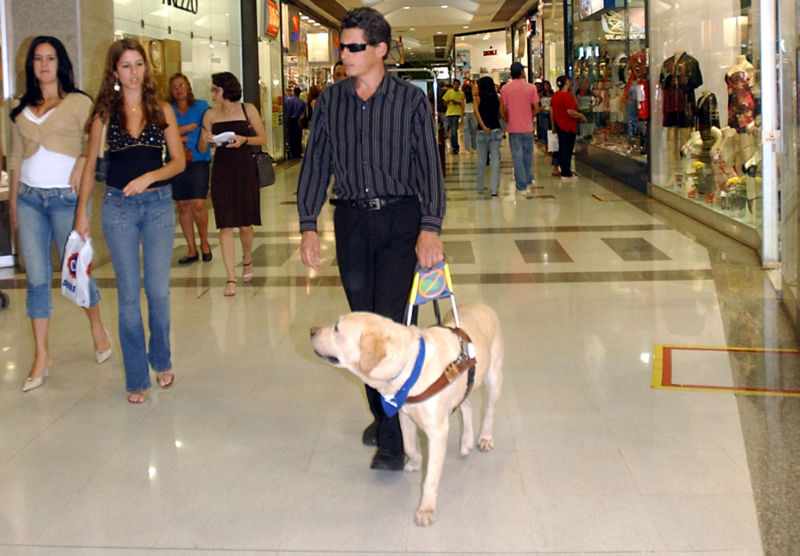
Creative commons image by Antonio Cruz/Abr of Agencia Brasil

Creative commons image by Antonio Cruz/Abr of Agencia Brasil

  • First, the majority of legally blind people can see something. 
  • Some legally blind people wear glasses to increase what they can see or to protect their eyes from bright light or to gain social acceptability (either by hiding eyes that appear a bit different or by simply alerting others to the fact that they don't see well).
  • Some visually impaired people DON'T wear glasses. For instance, my eyes look a little odd and I would get a lot less social flak if I wore sunglasses, but sunglasses cut way down on what I can see. Some vision impairments are not helped by glasses. Some visually impaired people wear contact lenses. 
  • Some people have to use a combination of contact lenses and glasses for medical reasons. Unless you're a doctor and the person is seeking your medical advice, this is not your business. (For instance, I see far better with contact lenses than with glasses--due to some complicated optical physics--but I can't wear contacts all the time for medical reasons. So, I wear contacts when I really need to see well, for instance when out in public, but I usually wear glasses at home.)
  • Some partially sighted people use white canes. The fact that someone uses a white cane means they are legally blind. It does not mean they can't see anything. I for instance can see quite well at about one or two inches. I can't see other people's faces so well or speeding cars.
  • Some totally blind people don't use white canes. They navigate almost entirely through echolocation and good memory. They are not in physical danger and it isn't your job to tell them how they should get around. I can get around like they do and I did for more than thirty years, despite not being able to see the ground very well, but I now choose to use a cane to avoid a lot of social flak. That is my choice and some people choose differently.
  • The fact that someone's eyes move oddly does not mean they are mentally ill or developmentally disabled. Again, I don't care to count the times people have told me that they thought I was "retarded" when they first met me only to be "pleasantly surprised" to find out later that I'm only visually impaired. This is the primary reason I have used a white cane when in public for the past seven years. I traveled the world without one, worked as a journalist in war zones and some other sketchy places and so on. But small town social life is less forgiving than that and I've been beaten into submission. I now carry a white cane as a sort of signalling device because I prefer the nasty social things many people do to visually impaired people to the nastier social things many people do to developmentally disabled people. Which means...
  • You'll sometimes see me using a white cane and then folding it away and not using it. You'll sometimes see me riding a bike in quiet areas without a lot of traffic. You'll sometimes see me hiking on rough terrain without a cane and then using a cane on a nice smooth sidewalk downtown. This is because the only real safety-related need for my cane is to avoid being run over by drivers who assume that every pedestrian can see them, and sure, they're supposed to stop but "just this once" the pedestrian should move out of the way or stay put or whatever (depending on the hand signal the driver is making).
  • And to expand upon this, people who use wheelchairs are not all paralyzed. Many can move their legs. Many can walk for short distances.
  • People who use wheelchairs can very likely talk just fine, as can people with white canes. and many deaf people can as well.
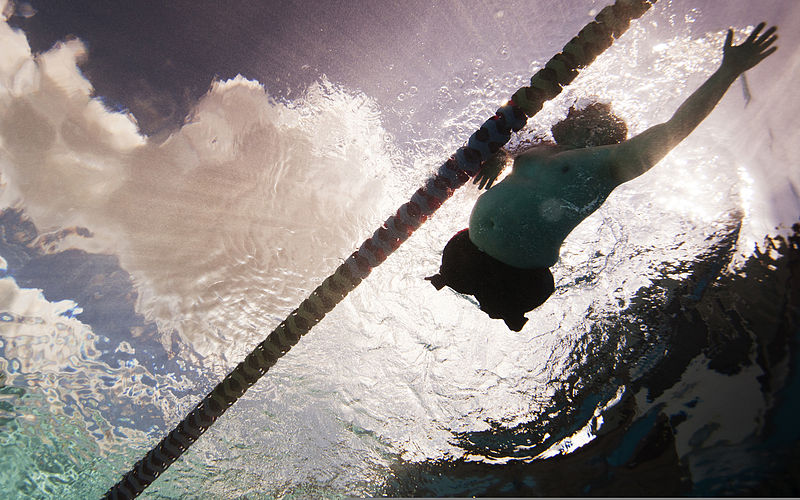
  • People who use wheelchairs or other walking devices are often powerful athletes. Using a wheelchair does not make a person an invalid. I am quite a good swimmer myself and a disabled man who used two canes to walk very slowly beat the pants off of me in a swimming race when I was twelve. Arm muscles are quite a thing in the water. I became a lot smarter after that.
  • Not all disabilities are visible or apparent to an outsider. 
  • The people who diagnose disabilities and prescribe aids for them have years of medical training. This is the job of doctors and specialists. It is not your job to give advice or correct "unfair" use of disability devices on the subway, at school or in the workplace. 
  • People who hold disability ID cards or disabled parking permits in some countries go through a long and arduous process of medical assessment. The benefits provided by such cards are not only minor but generally not of any interest to non-disabled people. So, just leave this issue alone. Unless you're a state medical assessor, this is not your business. 

Those aren't all the facts to be sure. But they all add up to the same thing. 

Please don't bug people about their glasses or lack there of or their cane or lack their of or their wheelchair or their hearing aid or any such thing or lack their of. It is their device and their responsibility. You can't possibly know enough to make a judgment on someone else's specific needs. Neither can I, unless the I'm the person in question.

If you're curious, many people with disabilities will be happy to explain, if you ask politely. Some won't. In the end, it is really their business. 

Comment below with questions and your own experiences. I love to hear from readers. Let's get a discussion going. Share this post (using the button on the lower right)  to help spread education. Best wishes!

What it's like to suddenly be free for the first time

I was asked a question on Quora recently, "What is it like to be blind and take public transportation?" Oh, boy! They did ask though. I can get a little intense on this subject. And since my last post picked on the Czech Republic and trains, two things that have brought much good into my life, I feel like I need to balance the scales.

So, I'm reposting my answer here. Fair warning. They might as well have asked, "What is it like to be free for the first time?"

I grew up in a remote rural area in the US. The nearest "town" was five miles away. Population 250. My best friend lived twelve miles away. Most of those miles were rough gravel roads that make bike riding take a lot of extra energy. Riding to the nearest town on bikes was the first right of passage. My older brother did it first. Then me. 

Yup, I was legally blind. I did it anyway. I can see just enough to tell if there are large shapes right in front of my front tire. If I don't ride too fast I can follow the blurry color of the road and not end up in the ditch. If there aren't very many cars - and there was only one every hour or so - I do okay. When I was eight or nine I decided that I was going to ride to a slightly larger town, where our school was located, about ten miles from home. My brother, who was two years older, hadn't even ridden that far yet. He didn't believe I would. I got up early one spring morning, packed a lunch and set off. He caught up with me a few miles later and beat me over the line of the city limits of the town by about half a second. So, okay, he technically made it to that town first too. 

I always knew I wasn't going to be able to drive. It was like knowing if you're right or left handed. I didn't think it was a big deal. Everyone around knew I couldn't see much. It didn't matter in most things. We used to joke, "Shucks, Arie won't be able to be a truck driver or a pro-basketball player. She'll have to be lawyer instead." We were dirt poor but I was a champion debater. I almost always won arguments with adults. And we all set our sights high. 

Not driving started to become an issue when I was a teenager. I saw my brother drive off to see his friends on the weekends. I had to beg for rides everywhere and distances were large. I often couldn't get a ride and there were many lonely weekends. I wanted to join the teenage life of the nearby towns but when I was fourteen my older brother had to live with another family in order to attend a better school hours away, so I didn't have him to give me rides. I was mostly stuck.

When I was sixteen I won a scholarship to study in Germany as an exchange student. I spent a year with a German family and had my first real experiences riding buses and trains. I rode a bus from my host family's suburb into the city to go to school. But I knew there were buses in the US like that - usually one line that went from point A to point B. I had spent a summer working in Portland, Oregon and that was how the buses went. They went so rarely that you had to plan your whole day around their schedule and if where you wanted to go wasn't on that one special bus line, you were just out of luck or you ended up walking for miles through suburban streets that often don't even have sidewalks anymore. So, at first I didn't get it. 

It wasn't until a few years later that it finally clicked. I had met my first love while in Germany. He was a young man from Czechoslovakia in the old East Bloc. A few years later, I returned to Europe to study in what was then the Czech Republic on another foreign exchange program, this time for my university. I lived and studied in a town a hundred miles from the area where my circle of Czech friends mostly lived. And yet, I got to see them every weekend. I would finish with my last class, skip down the long flight of ancient stone steps from the university and right onto a waiting bus to the train station. Trains ran every hour or even more often at peek times. It was no big deal. My friends mostly lived in small villages, scattered around East Bohemia but there were always buses from the train to their houses. 

By Friday night, I would be sitting at the table with my friends drinking good Moravian wine and playing music 'til all hours. And on Sunday night I'd be back in my dorm, ready for classes. At my American university, I never left campus for months at a time. There was nowhere to go and no way to get there where I studied in Wisconsin. 

The next summer found me in Prague, working as an intern for the English-language newspaper The Prague Post. I had to learn the public transportation network perfectly. I often had to rush out to a story or track down some obscure address in an out of the way part of the suburbs. The first few weeks were disorienting. I would come up from the subway (metro) and feel like the world literally spun around me when what I thought was north turned out to be southeast. But by the end of the summer I was a pro. I could calculate complex transfers in my head and I knew where the various subway, tram, bus and train lines went and where they intersected. I could get from any place to any other place ANY TIME I wanted to. 

When I first realized that I literally started sobbing (in private, thank goodness).

I had never dreamed I would be able to get around on my own. I had buried the sorrow of it, told myself that it didn't matter. My family wanted me to be tough and never let on that being legally blind was an issue. And I had mostly done that. But it had mattered. Being trapped and unable to move in a society where everyone else can move around matters.

I have been asked many times why I moved to a country on the other side of the world when I have such close bonds with my family. I call my mom and my brother multiple times every week and we are ever so grateful for Skype and other changes in technology that have made long distance relationships easier. I miss the wild beauty and clean air of Oregon with a constant ache. I'm not really all that fond of a lot of things about Central Europe. I am a country girl and always will be. I don't like cities that much and I yearn for the comfy atmosphere of country kitchens and old friends. But I left all that. I married a Czech man (not my first love, unfortunately) and bought a house in a little town outside Prague. And I am stuck here now.

I did it primarily for public transportation. If it weren't for trains and buses, I would probably be back in Oregon, which still feels like home. We think about moving back sometimes, my husband and I, but our discussions always get stuck on that issue. The only places we could live, where I could have anything like a reasonable lifestyle or career, are the centers of a few large cities. We don't want to live in a big city and even in the cities it isn't easy in the US. I lived in Brooklyn and worked in Manhattan one summer. It was doable but the public transportation was rough and grimy and only in the city. It still entailed a lot of miles of walking. 

Early in the industrial era, the United States was an international leader in rail transportation. But the American rail companies were sold to corporations with big oil interests years ago. Some tracks remain but mostly only for heavy freight. Truly useful (defined as quick and ubiquitous) public transportation has been curtailed in the US through a combination of political, economic and geographical problems over more than half a century. As a result, I am an expat, unable to live a reasonable life in my own country. So, yeah, I can get passionate about public transportation.

The Czech Republic has one of the tightest rail networks in the world. There are stops literally everywhere. Other than a few remote areas, public transportation will take you within a mile or two of any destination, often faster than a private car will. I know some companies where the top executives take the slick, air-conditioned, wifi-enabled trains to conferences in other European countries while the lower managers are required to drive the company cars, because it's just faster, better and more pleasant than driving. 

I can go anywhere virtually any time I choose. I take my daughter to guitar lessons and international choir practice in the city just like other mothers. I visit friends in other cities or I just get outside town a mile or two to walk in a forest on a Sunday afternoon. It may sometimes take a little planning if my destination is remote or distant but it is possible. And it would simply be impossible in places without good, tight and truly functional public transportation.  

I love to hear from readers and I don't bite, even if you don't agree with me. Leave a comment below. What unlikely subjects can stir your passion?

How not to get mad

I might have been annoyed this week. But I wasn’t.
 
I live in the Czech Republic and the president is Milos Zeman. I’ve been watching his political career for nearly twenty years, since I was an intern at the main English-language newspaper here in the mid-1990s. I’ve always noticed that he has some sort of muscle anomaly in his face. I don’t agree with his politics most of the time but I did think it was refreshing that a politician with such a physical difference became president.
 
Then this week he did something very, very, very… irritating. He went to lunch in a small town and before he got there his event team went in to check out a nice restaurant. They liked the space and everything about the place, except for two of the employees. One had a visible physical disability. The other was clearly developmentally disabled. Both are regular employees of the restaurant, serving customers and earning wages and tips. But the president’s staff said they couldn’t serve the president. The restaurant was required to give the two employees mandatory leave and hire temporary workers from a hospitality school.
 
Now as many people know, I’m legally blind. So... I found this news item disturbing.
 
My husband pointed out to me that one doesn’t have to be directly associated with the irritating news of the world to be affected. He was similarly disturbed by listening to a radio program which made a case for why same-sex spouses in a legal partnership are not allowed to adopt children, including the children of their legal spouse. So, if you are gay and you are married and your spouse has a child, you are not allowed to adopt the child to ensure that the child has a parent in the event of the death of your spouse. The reasoning? Children must have both male and female influences. They apparently forgot that single women and single men are allowed to adopt.
 
Okay, our children are adopted from orphanages where many other children wait for parents who are open-minded about ethnicity. So I guess we feel associated with that issue too, but is anyone really unassociated with these sorts of issues? If you don’t have a family member who is affected, you surely have a friend who is.
 
The world can be disturbing.
 
And so it is good to have a sanctuary, some place where the world can’t intrude. Even if that’s just a corner by a window that’s well-suited to reading or a spot under a favorite tree.
 
I have always made a sanctuary for myself, even when I traveled. I’ve lived out of a backpack for years at a time and I kept a candle, a handful of pretty pebbles, some tea, a tin cup and a alcohol burning mini-stove tied up in a scarf. This I could spread out anywhere – and did – on a rock in the Himalayas and on the floorboards of a shack in the Amazon jungle. It made a place of peace.
 
Now I have a larger sanctuary. I am lucky to have a little house with heated tiles on the floors and a warm fireplace. I even have a garden outside full of maturing trees and herbs. And these days I have the luxury of being alone in this place to write for several hours a few days each week. That is a great privilege indeed.
 
And so, I really wasn’t all that irritated this week, even though I was tempted.
 
Instead I listen to my children playing in the other room. I can hear them playing with their collection of letter stamps. I can hear the soft sound the stamps make as they push them against the ink cushion and the “thunk, thunk” as they stamp them onto pictures they are making. I can hear the whack as one child hits the other with a stamp and the yowls of protest. I call a truce, backed up by Mama-power, and they sit separately for awhile until they are calm. Then they resume their pictures. All the while I am making apricot cobbler and I don’t have to turn my head to “see” what my kids are doing.
 
So, the Czech president can have his bland lunch. This time I’m not irritated because he’s got nothing on me. I am sorry that he doesn't know about the richness of all the senses of the body and all the uniqueness of the mind. I'm sorry for him. There will be days when my ire is raised but not today.
 
The peace of my writing sanctuary has brought me to the half-way point in my first draft of the Kyrennei Series Book Four. Don’t get too excited, if you’re an avid reader. It is still a rough draft. But it is coming along and the computer demons have been largely appeased.

Being a rebel with a pen is a lonely job but someone's got to do it. We're here to support each other. Keep in touch. Write a comment below and tell me what you do to keep from getting mad. I love to hear from you.