
Writer's Toolbox: Screwdrivers and pliers - Writing and publishing terminology
/Every profession has it's secret language and writing is no exception.
I'm putting together a collection of tools and inspiration for writers here on my blog site. And one of the first things that goes in that toolbox are the terms that writers use to talk about writing. I'm not talking about things like "grammar" or even what kind of keyboard one should use. I'm talking about the professional terms that are crucial to development of the craft and surviving in the world of authors.
I have been writing since... I don't even know when. Maybe since I was seven and my family took a trip to Mexico and I wrote bits and pieces about it in a scrapbook. When I was a teenager I dabbled in fiction and then I turned to what I thought of as serious writing, i.e. newspaper journalism. While working as an international correspondent in places like Kosovo, the Ukraine, Ecuador and Bangladesh, I also took writing classes and joined writer's groups.
And from all those years of experience, I know for certain that writers get better. I haven't slid off the fence yet in the argument over talent versus experience. I think there are some assets that are handy to get genetically to be a writer. But I definitely know that no amount of inborn "talent" will make up for lack of practice and knowledge.
And the most basic knowledge, as with any profession, is knowing the professional lingo. That's not just so that you can talk to other writers and sound like you know what you're talking about. Each of the terms I will list here packs a key concept that writers use as surely as a carpenter uses an electric screwdriver or a sander.
There are probably too many words I could list, so I'm going to just start with those terms and concepts that I have seen writers struggle with. I'm going to be teaching writing workshops this fall, so I am likely to add to the list as I go.
Genre woes
I'm not going to cover everything to do with genres. That's a huge topic but here are the terms that I have seen cause misunderstandings.
Genre-blending and genre-mixing:
Genres were made up by the publishing and bookselling industry. It was an attempt to get people to buy more books and it worked. If a type of story was successful, publishers put out more of that kind of book and booksellers put them on a shelf next to the successful books of similar type.
But these categories are essentially arbitrary. Someone somewhere decided that all stories that hinge on a character trying to find out a secret (such as who done it or where is it?) should be put on a shelf together. And then someone else decided that stories where a romantic relationship is the central point should be on another shelf. Thus the mystery and romance genres were born.
That may be simple enough but then came science fiction, fantasy, chick lit... And now we have steampunk, new adult and dystopia. Each of these "genres" has a description but they are often indistinct and not mutually exclusive. For the publishing and bookselling industries this is a problem.
When a writer (I'm looking at you Morgan Daimler) writes what at first sounds like a mystery but puts it into a fantasy world with a romantic relationship as central to the action and aims it at a specific cultural or religious group of readers, your local bookstore is in trouble. They don't know where to shelf it and if Daimler had shelved hers in mystery, where it seems to belong on first inspection, I never would have read it, because mystery is one of the few things I almost never read.
Enter the age of Amazon and similar retailers. Thanks to complex algorithms, we can now categorize books much more precisely and readers can find what they want to read based on a lot of factors - the reader's age, culture, gender and interests as well as the the type of story or what is central to the plot. This means that writers and readers no longer have to stick to these arbitrary and ultimately claustrophobic categories known as genres.
The result is a lot of genre-blending and genre-mixing in which writers take interesting facets of various genres and come up with something fresh and new that would have been "impossible to publish" ten years ago.
Dystopia:
I would like to define one particular genre because I have seen several online forums where significant confusion over the definition reigned. Thanks to the popularity of books like The Hunger Games and Divergent, writers love to claim that they are writing dystopia these days.
The problem is that the virtual shelves of dystopia have been inundated with piles of books about zombies, vampires and apocalyptic disasters. While there is nothing inherently wrong with this fiction, most of it isn't dystopia.
The quick and dirty definition of dystopia is as easy to formulate as that for the romance genre. It is said that it isn't a romance if you can take the love part out and still have a plot. Similarly, it isn't dystopia if you can take the socio-political problems out and still have a plot.
Dystopia is the counter to utopia. It is society gone wrong in some crucial way. George Orwell is often held up as the father of the dystopian genre and a lot of dystopia is like Orwell's work, overt social commentary set in a totalitarian society that exaggerates certain elements of our own world to show what could happen if we continue in some unwise direction. Some dystopia is more subtle, showing an outwardly ideal society, often set in the future but showing how an individual can be harmed even within an ostensibly perfect system. More rare is dystopia set in our times and essentially in our world but highlighting particular aspects of contemporary society as dysfunctional.
Steampunk:
Steampunk is a relatively new genre that includes stories that take place in a society that is not high tech but includes some technological advances. Some of the technology tends to be a bit fantastic, such as flying machines with flappable wings that run on steam engines. But it isn't all silly. Some steampunk is set in a future world where much of the high technoogy has broken down for one reason or another. Some of it is set in a fantasy world that is neither entirely modern nor entirely medieval.
New Adult:
New adult is sort of like a genre that occupies the crack between Young Adult and general adult-level genre fiction. I like the theory of a genre that appeals to twenty-somethings but alas New Adult has been largely taken over by stories set on or around college campuses that involve romance. It should legitimately be called New Adult Romance now, but for the time being the going term is New Adult.
Narrative nonfiction:
Narrative nonfiction is a writing style as well as a genre. I have again seen a lot of confusion about it in the online world. Just about any sort of nonfiction can be written in narrative form, meaning written as if it were fiction... as a story. A lot of the best history books are being written this way as well as memoirs, self-help and inspirational books. There are also some pretty good technical how-to books written with at least elements of narrative style.
Style and writing terms
This is not a comprehensive list, just the things that I have run into in discussions with writing students, writers or editors in the past year.
First person
I am now writing in first person. I personally prefer first person narratives, even when I'm reading fiction and the author isn't really the character talking in the book. I like first person because it brings the reader right into the story intimately. I know there are disadvantages to it though. For one thing, the reader has to take my word for it. If I had written this paragraph in third person, I could have made the advantages of first person sound much more universal and authoritative. This way you just know that I like it.
Second person
You may be reading this either to stock your writer's toolbox or simply to be entertained. Whatever your reason, you are now reading a paragraph written in second person. Second person is what happens whenever you the reader are the primary character in the narrative. You can try it in fiction if you want but you'll find that it is exceedingly difficult to pull off well.
Third person
Most writers choose to write in third person. It's probably the most versatile point of view in terms of the types of voice and tone that the writer can employ. Third person simply means that the story is about a character who is named and referred to as he, she or it. The reader isn't addressed directly and the narrator remains in the background, never speaking directly about him- or herself. Arie Farnam wrote this paragraph in third person, which creates some minor problems when it comes to avoiding the passive voice.
Passive voice
Passive voice is often misunderstood. I am amazed at the number of writers and editors who are confused by what is passive and what isn't passive voice. The phrases above with "misunderstood," "amazed" and "confused" are all written in passive voice, as is this sentence.
Here, let met me fix that. (Because passive voice is evil, right?) Many people misunderstand passive voice. I see a lot of writers and editors who confuse awkward sentences and passive voice. I wrote the last three sentences in active voice.
If you go to a high school composition class, you will be told to avoid passive voice like the plague. And it is a good thing to do at the beginning. Beginning writers almost always overuse passive voice and it is very helpful to try to avoid it. The vast majority of sentences will be more concise and interesting in active voice.
The easiest way to avoid passive voice is to go through your writing and look for passive adjectives (adjectives that describe something that has happened to the noun, like "written", "flown" and "misunderstood.") Try turning these sentences into active sentences and see if they're better that way. Usually they will be.
Biut there will be times when they aren't. Passive voice isn't bad to the bone. There are reasons to use it. Laziness is, however, the most common reason it is used and that isn't a good reason. When I said "Passive voice is often misunderstood," I was avoiding having to say who misunderstands passive voice. I could have been doing that as a way of being diplomatic, which is sometimes a good idea, but I was surely also doing it partly because it is easier to hint that some mysterious "them" out there misunderstands passive voice than to do the hard work of thinking about exactly who does.
I've recently had editors tell me things are passive voice when they aren't. Past perfect and present perfect sentences like "She had read all of my books" and "I've been working at the store" are not passive. The are easy to confuse with passive because the form of the verb used in those tenses in English (Fun fact: and in Russian!) is the same as the passive adjective used in passive voice. The linguistic term for this type of word is "the past passive participle." You really wanted to know that, didn't you?
Writing for a living
There is a lot of hype about writing as an entrepreneur lately. I get it. Writers need to think like business people in order to succeed. But the terminology can be scary. When you get right down to it "an author entrepreneur" is a person who makes a living from writing books.
Self-publisher or indie-publisher:
These two terms get used interchangeably most of the time. Indie implies a bit more rebellion and a desire to keep independence even from retailers and other services. There are self-publishers who would gladly sign up with someone who would do a chunk of the business side of their work at the drop of a hat, in order to have more time to write, and independence be damned. But in general, both self-publishers and indie-publishers are writers out there trying to do serious writing and publishing, often as a business. Their primary goal is usually not fame and fortune or the kick of seeing their name on a book. And many never do see their name on a "book" because they stick to ebooks. It reminds me a bit of the culture of international freelance journalists of the 1980s and 1990s, minus the worn out shoes. It is chaotic and only the hardiest survive for long.
Traditional publisher:
A traditional publisher is a company that makes a profit from actually acquiring rights to publish books, publishing them, selling them and paying authors a royalty. There will always be some overlap in these descriptions but a self-publisher doesn't become a traditional publisher just by giving their publishing "company" a name that is different from their author name. Neither does a vanity publisher become a traditional publisher by accidentally selling a few books and actually paying a royalty once in a blue moon. A traditional publisher has to turn a profit in the traditional way.
Vanity publisher:
A vanity publisher is a company that makes a profit by charging authors for publishing services. This isn't to say that a vanity published book has never sold a copy or made the author a cent. Some probably have but the difference between a traditional publisher and a vanity publisher is that a vanity publisher charges for things that a publisher traditionally covers. Vanity publishers don't pay advances and they don't have very high standards (if any) about what they publish, so they'll publish just about anything. They also don't promote books or help in selling them in any way. But traditional publishers often don't do that last very much either.
Proof copy:
This refers to a printed book that is sent to you buy the printer (or publisher possibly) for you to check for mistakes before the book is approved as final. Proof copies usually have a page or a stamp that says "proof" on it, so they can't be sold as "regular books." Printers often charge less for them and so they don't want you just ordering a bunch of proof copies and selling them as if they were the final book. Proof copies can be sent to reviewers to get early reviews.
Ebook formats:
When I first got into indie publishing I was a bit worried by all the talk of formatting headaches and woes. I thought this meant that formatting was going to be as hard as learning webdesign had been. It wasn't.
Maybe it's just me but I don't find formatting to be that terrible. Okay, some of the work can be tedious. If like me, you started writing in MS Word without a care in the world and just typed, you might well have used tabs to indent your paragraphs and then after a few paragraphs Word picked up on that and started automatically indenting. But when you started a new chapter, you had to go back to pressing the tab button. This is the dumb way to do things, Arie... Yes, I know but I didn't even know I was writing something serious at first. So, anyway, if you foolishly did that, like me, then when you're finalizing your work, you have to go back and weed out all the tabs. Tabs are a big no no in ebook formatting. Put on some good music, get into a meditative mood and skim down the left-hand side of your screen and delete all tabs. Not hard, just tedious.
There are more complex parts of ebook formatting and I"m not going to cover them all here, but the essential thing to know is that, if you can organize a kitchen cabinet, you can format an ebook. Know the most important format names.
Mobi is the standard Kindle format.
Epub is the format for Android-based systems.
Ibooks is the Apple format.
I use Scrivener to organize large projects and Scrivener converts to Mobi and Epub formats easily. You can also now use Smashwords to automatically convert and they'll do Ibooks too. But in either case, you have to start with a very cleanly formatted manuscript. Do not try to insert extra lines anywhere. Learn to use page breaks. You can run into trouble with graphic elements and things like drop caps. So, it is best to avoid those until you are used to formatting.
Cover design:
It used to be that writers wrote. Not so much any more. Today, if you want to make a living as a writer you need to at the very least also be a marketer. Think of it as going back to the medieval days of traveling bards. Back then, storytellers had to market their work as well. That makes it sound a lot more romantic at least. But I digress...
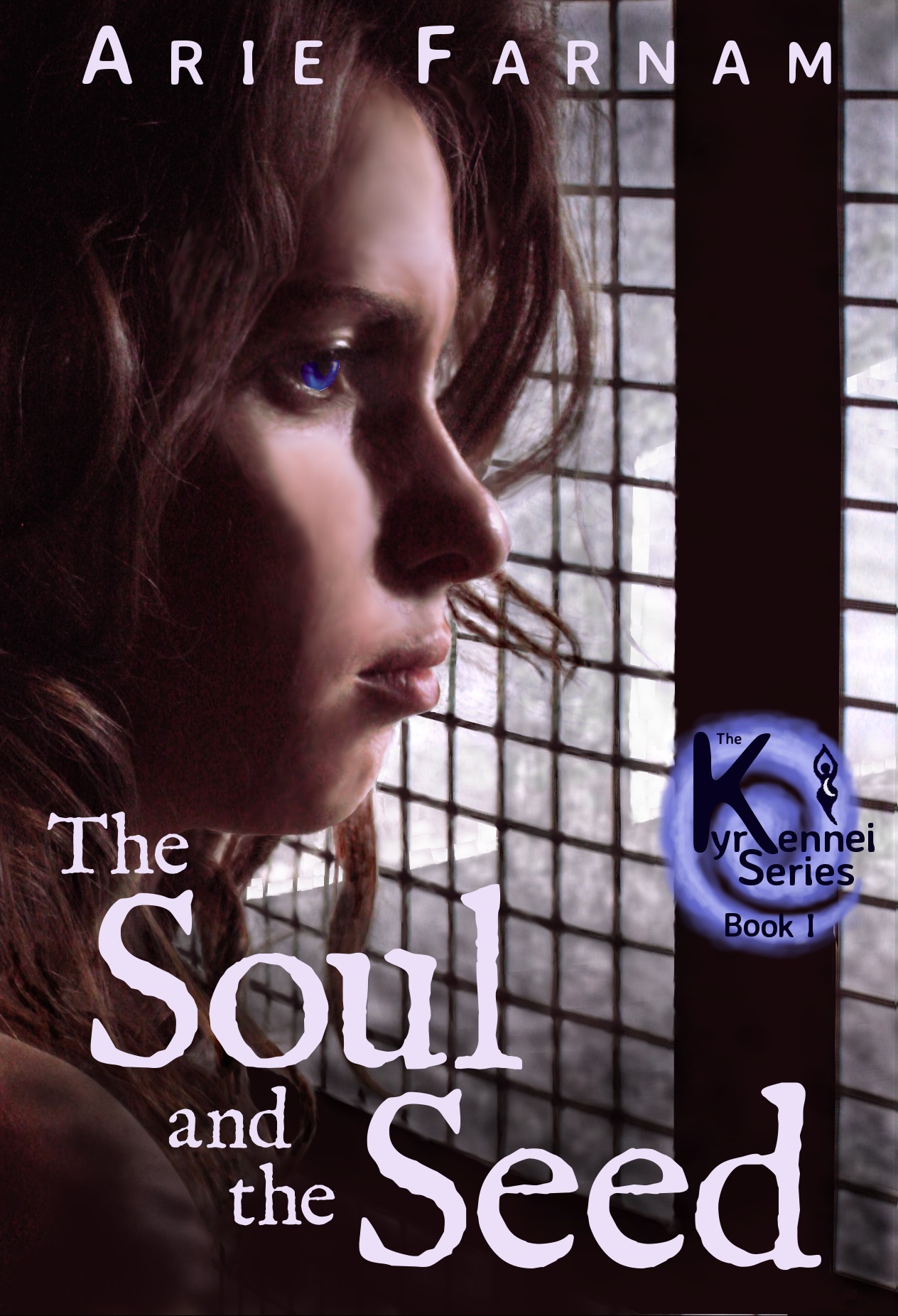
The other thing you have to do if you are publishing independently is worry about the design of your cover. There are hundreds of designers out there on Fiverr who will supposedly do it for $5 but if you look at their portfolios they are distinctly uninspired and you will have to provide all photos or artwork and tell them exactly how to do it. Ideas are not part of what they do. There are dozens of designers with webpages offering to design a more legitimate cover for anywhere from $100 to $1000. The average is around $200 to $300 at this point. Depending on your genre and your tastes, you can find a cover designer in that price range.
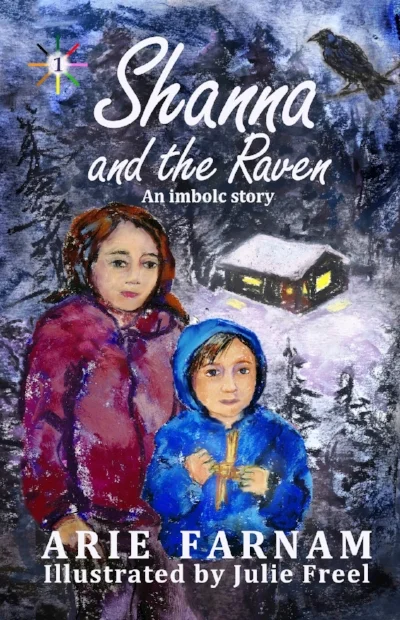
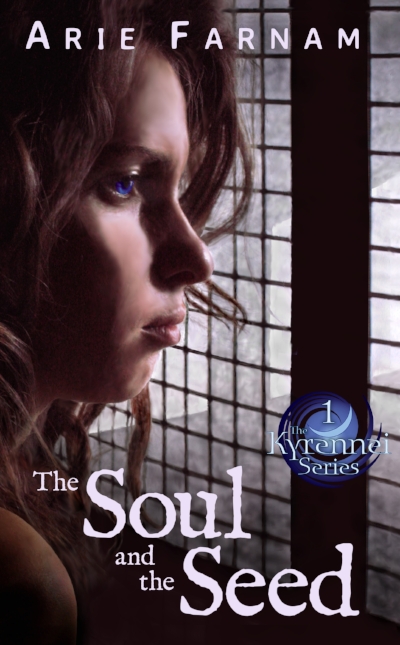
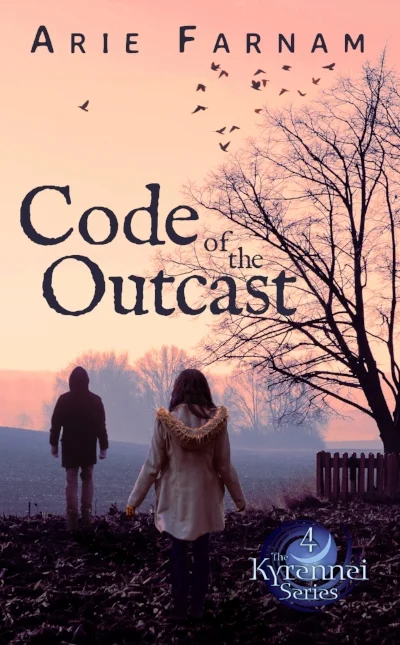
Call me picky but I couldn't find a designer portfollio for less than $500 that I liked even slightly and $500 is out of my price range for a single cover. So, I downloaded a free Photoshop equivalent called Gimp and spent three months learning how to run it. Many experts warn authors away from doing this and I may be a fool. I'm also an artist and a photographer, so maybe I'm not. I don't entirely recommend that everyone try to design their own covers. There are way too many badly designed self-published covers out there. If you do want to try it, expect it to take at least a few months to learn and study book covers and graphic design principles. Consider it every bit as important as any of the writing of the inside of the book. Technically it is actually more important in terms of initially reaching readers.
You can buy the rights to photos to use on a cover from sites like istock.com and shutterstock.com. There is a lot of talk of creative commons photos and there are lists of servers where you can supposedly find free photos. I have spent hours searching these frree sites and not only did I not find many good photos on them, I did not find one single photo that was not marked as copyright protected. These supposedly free site shave been taken over by photographers trying to sell their work. Be very careful about using photos from sites that claim to be showing creative commons images because many of the photos on these sites are copyrighted and downloading them from a site that says the photos listed should be creative commons is no protection. Read the small print. And that will take hours. The paid sites are not that expensive (less than $40 for 5 very large, very high quality photos of my choice from Shutterstock) and they are a sure bet.
In the end, I hired a model (i.e. a student friend) shot my own main photographs and then paid for a few more pictures from Shutterstock. I"ve very happy with the results so far.
Kerning:

If you are going to try designing your own cover, look up kerning and study it until you get it. Kerning is the technique of changing the distance between letters. It is a funny thing but you can take a perfectly professional photo and artfully arrange a title and an author's name on it and it will still not look like a real book cover, until you add kerning. Even the non-professional eye will know the difference if allowed to compare.
The overall explanation is that kerning is supposed to make it look as though the letters in a word are equally separated when actually it pulls some letters closer together or pushes others further apart. This is because some letters fit together nicely and others have bits that stick out and if such an awkward letter happens to be right next to another awkward letter they don't fit together easily.
Say in this font, "rt" tend to run into each other. You can't put them closer together and have them look nice, but "To" looks much better if the "o" is tucked protectively under the top line of the "T". You have to do this by hand on book cover titles and other large text. You need a solid graphic design program to do it and you have to know when and where to do it. That's kerning and it's one of the things you have to study if you want to try designing your own covers.
Coopetition:
This is a term coined by self-publishing trail blazer Joanna Penn. It refers to the mixture of cooperation and competition that has become the professional standard among independent and small-press authors.
The theory behind coopetition is that readers tend to read a lot of books and often in the same genre. Traditionally, readers were stuck following those authors most heavily promoted by the publishing industry and that is still where the bulk of the market is. Today, however, readers who discover one independent author usually discover other independent and small-press authors, particularly those in similar genres. This creates an interesting dynamic among author-entrepreneurs.
We have been brought up to believe that business as primarily a competitive proposition but that mindset doesn't serve well in the current circumstances. The pool of readers is infinite because readers read many books and they read more books if they like what they read. The result is that it is in the interests of the individual author-entrepreneur to help and promote their fellow independent and small-press authors as much as possible.
In fact, the closer the competition may seem, the more it is in my interest to support and promote another author. That may seem counter intuitive but it makes good economics. The fact is that if a reader discovers a book that is similar to mine (contemporary dystopia or fantasy thriller) written by an independent author, they are much much more likely to discover mine than is the average person on the street. And readers who have already discovered my books are more likely to stick around and be satisfied readers, if they can read something similar that recommended to them, while waiting for my next book to come out.
This concept wasn't entirely foreign to me when I started on this adventure, but I have been pleasantly surprised at how well it works. A side benefit is that the more you post on your blog and website, the more readers you attract in general. So, I post about interesting indie authors on this blog both because I want to give my readers something to chew on while I prepare the next book for publication and because that boosts my site in general. I also post everywhere else I can about these interesting indie authors because if a reader sees their work and likes it, they are halfway to finding my work.
Key abbreviations:
WIP
Work In Progress: This refers to whatever a writer is currently working on and has not yet completed or published.
POD
Print On Demand: This is a way of publishing a book in print format without having to pay for boxes of printed books that may or may not ever be sold before they gather too much dust and moisture and become undesirable. POD used to be fairly expensive and inferior in quality to comerically available paperbacks but today there are several companies offering POD services that make affordable books that are virtually indistinguishable from their mass-printed peers.
POV
Point Of View: This refers to which character's mind and senses the reader shares in a given section of writing. A lot of classic literature uses a distant or omniscient POV where the reader can see the story from many points of view but often not in great emotional detail from any one character. Recently, close third person and first person POVs have become more popular with stories that allow the reader to identify closely with the characters and their emotions.
R4R
Read for Review: This refers to the practice of authors giving out free review copies of their book either before publication or early on when they have few reviews. Authors may give R4R copies to bloggers or other professional reviewers but they will often also give out free copies to random readers on sites such as Goodreads or LibraryThing. There is an "honor system" involved. In exchange for a free book, the reader/reviewer agrees to post honest reviews, usually on Amazon at the very least and sometimes other sites.
It is key to note that there is no agreement about what kind of review gets posted. It may be hard to write a critical review when one got the book for free but the whole point is to help readers find books that they will like, so a modicum of honesty is an important part of the equation. R4R agreements are usually informal and made online between the author and the reader/reviewer. Sometimes the agreement calls for the review to be posted within a certain time period, usually two weeks from receipt of a free book, but authors will often wait longer for reviews from well-known reviewers.
If you have made it this far in this post, you are a serious reader and possibly a serious writer. So, if you would like to try out R4R yourself, drop me an email on this page and ask for a free Read for Review copy of my book.
Good luck in your writing adventures!