What ableism does

This isn't a whiny post. I swear. In fact, I'm actually a bit delighted to have run across such an elegantly simple example--a way to show what mundane, everyday and--yes--even well-intentioned ableism does. 

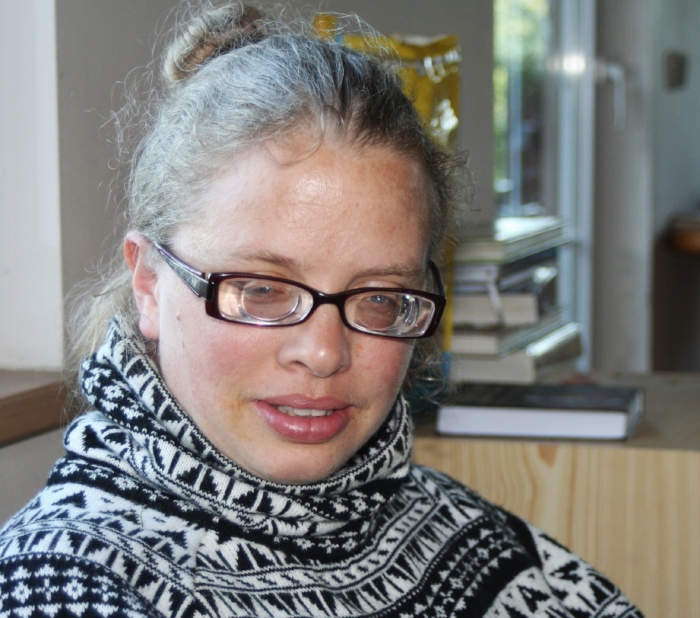
Photo by Arie Farnam

Photo by Arie Farnam

Here's the scene. I  recently met a lovely woman at a workshop. She has a son my kids' age. They share a lot of traits in common and enjoyed playing in the kids' part of the workshop. At the end of the workshop we exchanged contact information, chatting lightly about how we would get together sometime.

I do usually follow up on such contacts but only rarely ever see the person again. There are good intentions and then there is the chaos of family life, jobs and the daily grind. 

But this time, the contact came through. This woman was eager to see us. I had invited her to bring her family to my place and she took me seriously. Finallly, the date was set and they came, including her hsuband who I had met briefly at the end of the workshop.

At the workshop I used my white cane because it helped to persuade people to identify themselves verbally. He had seen that and seemed a bit cold when we were introduced. 

The family arrived while I was cooking lunch. My husband was at work and the kids were running wild about the place. I welcomed the guests and brought them into the kitchen. Then I returned to the stove. 

"See," the woman said gleefully to her husband. "She can cook just fine." 

He mumbled something unintelligble and she turned to me.

"He didn't think you'd be able to cook," she told me.

I feigned confusion and laughed. "I know people say Americans can't cook, but I've been in Europe for nearly twenty years. I'm civilized now." 

The man shrank back a bit more and seemed ready to flee. 

The woman corrected me. "No, he wondered how you'd cook with a white cane." 

I put my arms out as if I was holding a stick and stirring a giant cauldron. "You use a very big pot and stir," I said. 

We all laughed. 

I went back to the stove. I had to make gravy for the chicken-pasta thing I'd made. Nothing fancy. The kind of gravy I've made a hundred times before. This was a day with kids and I had chosen not to wow my guests with anything fancy, but rather to make bland, kid-friendly food. 

Still I'm not sure what happened. Maybe my hands shook just a bit. Maybe I was distracted by chatting and nerves. Maybe on some level, I wasn't really laughing, even though I didn't feel bad about our light exchange. The husband of my new friend warmed right up and we were soon in the midst of lively conversation about parenting.

But for the first time ever, my gravy clumped. My mother used to warn me about clumps in gravy but I've been fortunate that even when I first started out, I never had problems with lumps in my gravy. This time, the flour solidified into hard little globs, not lumps so much as gravel. 

I felt my face flush and my hands really did start to shake. My throat closed with fear. 

Over lumpy gravy. 

But I gritted my teeth and thought fast. I found a slotted spoon, strained the gravy and finished the lunch. All was good. The guests barely noticed my anxiety.

But here is the thing.

If the gravy had been lumpy and the hostess was not blind, it would have been just a bit less than perfect. We would have laughed about it and muddled through. It was because I had been told that there was a question about whether or not I could cook because I was legally blind that it mattered. 

Sure, no one would have said anything. But they would have gone on believing that I couldn't cook well because of my vision, rather than that I am a less than perfect cook because I have other things to focus on.

If a Hispanic person at a gathering is addressed as the maid by accident, it isn't just a social gaff. And if a child from a poor background is mistaken for a slow student, it isn't just a misunderstanding. These things have deeper roots and wider ranging consequences.

There is a reason they're called "loaded" issues. It's the difference between a gun that's loaded and one that isn't. 

I had fun with my guests and the kids had a blast. It was one of only two real playdates all summer and I was glad for it. I was also utterly exhausted by the end. The strain of making sure I don't fulfill someone's stereotype takes it out of me. 

That is what harmless, everyday, well-intentioned ableism does.

How to have a badass image

For those who were depressed by my last post, this one has a partial solution (even though it wouldn't really work in a rainstorm).

I'm told that my family thought I was a whiner when I was a child. My feet always hurt and I always cried about it. I grew up being told I had low pain tolerance. As it turned out, I don't. I have problems with the bones in my legs and they hurt... a lot when I walk more than a mile or two.

But believing that I had low pain tolerance I was sometimes confused. When I was in the Amazon jungle in Ecuador writing an article for The Christian Science Monitor on the construction of oil pipeline and the environmental fallout, I ran my foot into a metal grate and sliced a three inch gash across my big toe. The thing bled like you wouldn't believe but it didn't hurt that much. A storekeeper ran out and poured dry, instant coffee mix on my wound, which did make it stop bleeding. 

My interpreter was in shock and panicking. He got a taxi and we drove to a local clinic. When I looked out the window, I saw a rundown, dirty, Third World clinic and by then my brain was starting to kick in. This was the rain forest, an area with super bacteria. I had been told by other gringos that I had better not get hurt while I was down in the jungle or I'd be in deep trouble. And this was only the second day of my two-week stay in the humid, bacteria-rich rain forest. I could not afford an infected foot. 

I refused to go to the clinic and instead went back the little sweaty room where I had stashed my pack, including a very good first-aid kit. I cleaned and disinfected the wound with iodine and then bandaged it while my interpreter watched, wide eyed. Finally at the end he said, "You're badass." I blinked at him in surprise.

I am? What was I supposed to do? Cry? It wasn't that bad, just a little blood. Seriously.

I poured iodine on it and changed the bandage three times a day. I didn't get an infection and never felt like the cut was too painful. But the bones in my feet ached from all the walking I did on the rain forest paths. I still thought I was just sort of a wimp about that. 

Later I was told by a doctor that all that hiking I had done with backpacks had caused micro-fractures in the bones of my feet because they were positioned just a tad wrong and thus couldn't absorb the repetitive impacts of walking very well. As I've gotten older the pain has gotten worse and it's compounded by the fact that I'm visually impaired, so I can't drive and I have to walk a lot more than most. It isn't a good combination. 

Creative Commons image by Brent of Flickr.com

Creative Commons image by Brent of Flickr.com


So, I was delighted to discover the idea of an electric scooter. I need something that can go as slow as a brisk walk (so it doesn't go faster than I can see and cause me to run off the edges of curbs) and which is small enough to go on the sidewalk. This week my first electric scooter came and I took my kids to preschool for the first time without pain. The scooter is tiny, a two wheeled contraption that hardly enlarges the area I take up on the sidewalk. It requires a bit of balance to ride but fortunately balance is one thing I can do. It doesn't really get me places faster because I have to ride on sidewalks and go really slow but it will mean that I can go many more places than I could before. I may have to push it up the particularly steep hills around here but it is going down the hills that bothers my feet, not going up. 

Euphoric from my first school run with the scooter, I sat down to work and started sorting emails. Then I got a message from the users of a forum I frequent with a question of uncanny relevance: "Are disabled people giving electric scooters a bad image?" The author of the question explained that he likes the look of these little scooters, which are actually widely viewed as a bit nerdy. He wanted to ride one but was afraid that people might think he was disabled if he did because so many people with disabilities are now riding these little gems.

My reaction went from joy that I could tell someone about my awesome scooter, to irritation that this clod thought that someone assuming he might have trouble with his legs was such a terrible thing and finally to dawning realization.

Oh, I get it.

So, here's what I wrote in reply: "I’m sure you meant to ask “Are disabled people giving mobility scooters a badass image?” Because disabled people aren’t bad and can’t give anything a bad image. Using a mobility vehicle that doesn't contribute to climate change and not letting a little health problem keep you out of the fast lane is badass, no? I mean when you see that disabled person riding down the sidewalk, carefully avoiding toddlers and pets, you think 'Dude, that lady is badass and hot too. I hope I’m that cool when I get to be old and not so mobile. Now I even want to get one of those scooters so I can be kinda like her and maybe she’ll even ask me out.'"

I'm in far too good a mood at the moment to let some unthinking comment get me down. Electric scooters look geeky but they get the job done. I don't really know or care if anyone except the preschool set thinks I'm badass anymore (at forty), but I do often look at people and think, "That's badass!" when they are pushing their limits and finding hacks to get around troubles. There is plenty to be cynical about in the world and I often am, but it's nice when a mix of technology and creative problem-solving takes away a burden.

Overwhelmed? There's one choice we always end up making

I walk my kids to preschool in the pouring rain. It’s about a mile and a half and it wouldn’t be so bad except the main road through town and the buildings on either side of it are a couple of hundred years old. This means that massive regional traffic is now being squeezed through a single-lane road that was originally meant for nothing more than the occasional farmer’s handcart. To get around this bottleneck my kids and I would have to walk an extra couple of miles.

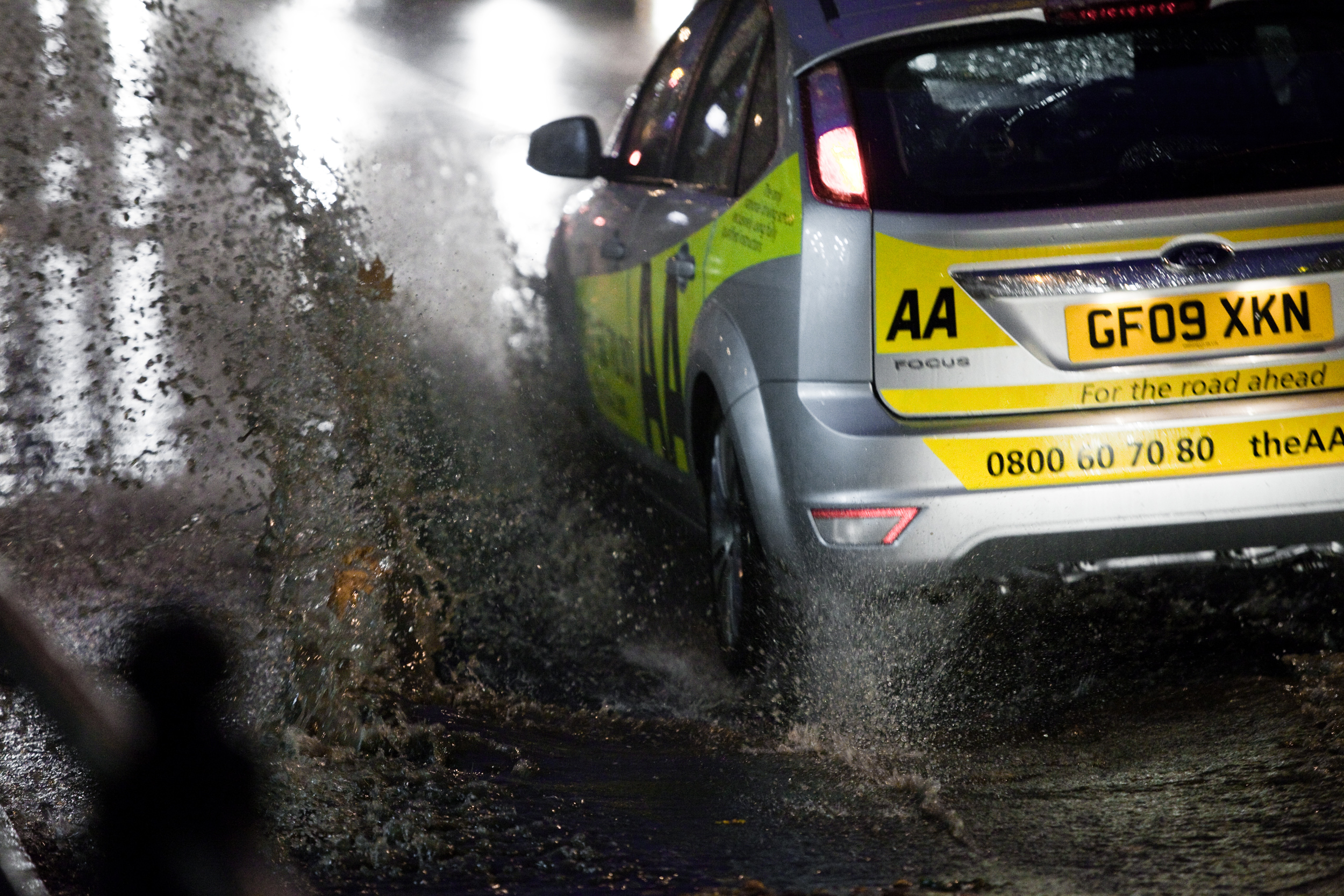
A deluge of mud and water sprays across a narrow sidewalk from the wheels of a passing bus. Creative Commons image by Matt Biddulp.

A deluge of mud and water sprays across a narrow sidewalk from the wheels of a passing bus. Creative Commons image by Matt Biddulp.

The sidewalks are often no wider than a sheet of printer paper (and sometimes they’re entirely non-existent). Add in overloaded drainage systems and the fact that most of the inhabitants of the hilly country around our town drive large vehicles and live lifestyles in which walking is considered eccentric (and voluntary).

All told, it isn’t very pleasant to get to the preschool or to the medical center on the other side of town. 

An endless stream of cars roars by, pushing and then exceeding the speed limit even though there isn’t much space between them. Each one in turn sends a wave of dirty, oily water spraying across my legs and across the torsos of the children. Each driver would have to look in their rear view mirror to see the spray of water they have personally hit us with. But they can all see the car in front of them squirting the sludge on us.

If they looked... if they thought at all, they would know that their car is going to do it too. They don't think or they don't care. Hard to say which.

We come to a tiny cramped parking lot for three vehicles in front of a shop. I go in front, keeping my children behind me as I carefully make my way around their bumpers, just inches from the zipping, roaring traffic. Sure enough one of the parked cars jolts into motion without warning just as I step behind it. The driver was probably trying to get into a tiny break in the traffic on the main road. He slams on his brakes and I jump backward but his bumper still comes in contact with my leg. I make my way toward the front of his car, to get around in the gap he has now left there. (Yes, he turns out to be a man.) We exchange angry words.

“People shouldn’t walk out in this. It’s ridiculous!” He looks frazzled and he is obviously not thinking about the fact that I’m carrying a white cane. If I want to get to work, get to a doctor or get my kids to school, I have to walk. 

We continue down the tiny sidewalk--walking the gauntlet of deafening noise, noxious fumes and greasy spray—with the very real possibility of sudden death only inches away.
I’m juggling a white cane and an umbrella against the pouring rain, but my small daughter takes my hand anyway and when the sidewalk broadens enough that we can walk side by side, she asks, “Mama, why are people so mean?”

A woman holds an umbrella to try to block a gush of muddy water showering her from a passing car. Creative Commons image by Brett Jordan. 

A woman holds an umbrella to try to block a gush of muddy water showering her from a passing car. Creative Commons image by Brett Jordan. 

I’m already having enough trouble with my emotions and I clench my teeth, unable to answer without saying something hateful that a child shouldn’t hear. 

But right then the car coming toward us on the road slows remarkably. The driver doesn’t slam on the brakes, but simply slows to a more reasonable speed. There is nothing else around except us in the narrow road and the street is open and empty in front of the car. The frustrated drivers in the cars behind the slow one crowd up on the bumper, but that one vehicle goes past us without spraying dirty water. I can only tell it’s silver. I can’t see anyone behind the windshield or even the make of the car. 

But it gives me the chance I need. “They aren’t all mean,” I tell my daughter, while I reach back to make sure my five-year-old son is still right behind us. “Did you see that car slow down?”

“That was a nice one,” my daughter says.

“That’s right. We get to choose if we’re kind or cruel,” I tell my kids.

Your Choice

When a kid grows up with any sort of significant disadvantage, she'll necessarily have some limits on her choices in life. But this is one thing my kids get to choose, even if they don't have all the privileges bestowed by wealth or white skin. One day they will be adults in this hectic, crazy-making world and they'll get to choose to be thoughtful about their actions and words... or not. They'll get to drive and slow down when they see someone trapped between a gutter of water and a wall... or not. They'll get to carefully avoid racially loaded language, ablelist metaphors and national slurs... or not. These are all part of the choice to be mindful of our impact in the world (or not). 

Here is a truth. I actually don’t think all the people rushing by and drenching us want to be cruel. I know how hectic and pressured their lives are—bait-and-switch professional jobs, kids who have to be all-stars in order to even be considered for the college track high schools, rising prices, bills to pay, health troubles of their own. There is virtually no one who doesn’t have to struggle. 

And to have the presence of mind to slow down in order to avoid drenching someone at a narrow spot in the road? It isn’t easy. 

Another thing. White people don't want to be cruel when we accidentally assume the one person at the meeting with brown skin must be the maid or when we let racist rhetoric slide in our professional, social or religious circles and pass it off as "a difference of opinion." Most white people today, if they stop to think, know better. But thinking... taking action in a group like the driver who made sure several other cars slowed down and didn't splash us... takes mindfulness and focus. And it is damned hard to focus with what's going on around us--in life and in the media. 

Presence of mind is key though. It isn’t enough to want to be a benevolent. We must also cut through the chaos and focus enough to see where we may unwittingly do genuine harm. Being mindful of our impact both on other people and on the environment (and thus on future generations) is no small thing. But it is what differentiates kindness from cruelty and often defines self-respect.

A Mindfulness List

Some of us like to make lists and lists can help us to remember, not just to buy bread, but also to remember the things we are aware of sometimes but need to be mindful of all the time. Mindfulness lists might include changing habits of speech that have become offensive in society, doing less harm in our consumption, moving and relating in ways that don't hurt others and so forth and anything else where you've thought "I didn't mean to hurt anyone by doing that but I did."

Here are a few examples of the things I want to remember to be mindful of myself—despite how overwhelmed or frazzled I might be with my many hats and roles in life. This is my personal list--not the most important things in the world. Many things that are important I am already am mindful of. That's why I don't have avoiding racially stereotyped language or recycling on this list. Those were on my list twenty years ago and now I'm constantly mindful of them. Here's my current list:

  • Say hello to and thank people in low-status jobs, such as cleaners and catering staff.
  • Whenever possible buy from companies that pay their employees a living wage no matter what country they work in. 
  • If I want to ask a person of color to speak on their ethnic group, make sure I've asked them to speak on an area of professional, academic or other expertise unrelated to their ethnic group in the past.
  • If I'm around when someone makes a dismissive or belittling comment about a disadvantaged group or uses derogatory language (even if they don’t mean anything by it), I  want to be someone who speaks up. Educate gently at first, then firmly if necessary. 
  • Speak to children, foreigners and people with developmental disabilities in a normal voice. Take a smidgen of extra time to make sure you’ve understood them. 
  • When attending a racially diverse meeting, make sure someone of a background different from my own has been heard from before speaking up for a second time. 
  • Notice when I accidentally judge and jump to conclusions about another. Stop and reconsider. Weigh the known facts and toss out assumptions and statistical probabilities, when it comes to another person.
  • Don’t swat honey bees or bumble bees, use a rag to swipe them back outdoors. (I know that one sounds trivial by comparison but in the scheme of things, who knows. It's my current environmental awareness goal and it's hard because of my vision impairment and moderate bee allergies.)

What's on your mindfulness list?

We won’t be perfect. Life can be crazy and we're often trying to do things more long-range than these as well. These are just acts of mindfulness, not anything that will change the world. We also want to do serious work for positive change. 

Maybe that is the most important thing I wish to remember. 

  • Expect that everyone you meet is probably pretty frazzled and usually for reasons beyond their control. Cut people some slack.

Keep trying to be the sort of person you respect.

Tips for working with a blind colleague

Creative Commons image by Irish Typepad of Flickr.com

Creative Commons image by Irish Typepad of Flickr.com

The other day someone asked me about working with a blind colleague in a professional setting. It brought me back to the days when I used to work in offices. Sometimes I hid the fact that I was nearly blind. In other situations, I cautiously let people know about it. Neither approach made the work environment very pleasant. Never did I work with people who asked how they could work with me--a legally blind person--more effectively or how we might increase our flow and productivity and ensure more good camaraderie and less stress in the office. I very much appreciate this question now. And being a lot wiser (and older) than  was in my office days, I actually have some answers. 

Here are a bunch of ways you can make working with a blind colleague a blast and get the most out of your talented team. 

Creative Commons image by Sonia Belviso

Creative Commons image by Sonia Belviso

  1. Tell the blind colleague who you are the first time you meet.
  2. Tell the blind colleague who you are when you return from getting coffee. Say, “It’s (your name).” No explanations or embarrassment necessary.
  3. Tell the blind colleague who you are when you return from getting something off the printer.
  4. Tell the blind colleague who you are when you want to ask a question.
  5. Tell the blind colleague who you are when need to borrow something.
  6. If you borrow something, return it to the blind colleague's hands, not to the desk or shelf. There can be exceptions to this rule, if you have discussed the item specifically and there is a very precise (within four inches) designation of where the item belongs.
  7. Tell the blind colleague who you are when you say good morning.
  8. Have everyone say their name at the beginning of meetings. Every meeting! Even if your colleague “should” already know who the people are. Even if the blind colleague has learned to recognize every voice in the room, some people may not speak at all unless they are asked to say their name. In informal and repeated situations just going around and quickly saying names is enough and it usually takes no more than a few seconds if done without embarrassment and unnecessary argument.
  9. Tell the blind colleague who you are when you ask if he/she wants to go to lunch with you and other colleagues.
  10. Do ask your blind colleague to come to lunch or for other social engagements with colleagues.
  11. Stop telling your blind colleague who you are if he/she tells you you can stop. Usually this means the person has learned to recognize your voice.
  12. If possible, let your blind colleague have his/her own tools and utensils and don’t touch them without asking. Do not “put away” something that your blind colleague owns or uses. If you have to share certain things agree on an exact location where they will be kept.
  13. A place for everything and everything in its place.
  14. When someone who is less familiar comes in your office, let your blind colleague know, even if it is an informal visit and the blind colleague has met this person many times before. Say, “That’s (person entering’s name) coming in.”
  15. In meetings, be aware that conversation flows primarily through eye contact and visual cues. Your blind colleague may either appear to be overbearing and interrupt others or may not engage in the meeting enough. This is largely because of the inability to see other people’s eyes. It is helpful if meetings are structured and someone is in charge of designating who will speak. In less formal meetings, it is good if the leader or facilitator is aware of the issue and watching for when the blind colleague is trying to work into the conversation.
  16. When showing visual materials at a meeting, describe them briefly. Say something like, “This is a graph showing our results from the last quarter. It shows that…” or “This is the new logo for X. It’s an abstract shape in blue.”
  17. Include important information from meetings in an accessible format—digital or Braille (if your colleague uses Braille. Not all do.)
  18. If attending a conference or larger meeting together, you may want to let your blind colleague know who is speaking, read name tags or describe images presented.
  19. If your colleague asks for help with physical navigation, you can help, but generally he/she won’t and physically getting around is not the issue. Helping in social situations is much more important.
  20. Avoid touching your blind colleague without permission. Don’t gently touch your blind colleague’s shoulder to announce your presence. Use a soft voice and say “It’s (your name).”
  21. With a blind colleague who is new to the office, “show” your colleague the locations of objects in one of two ways. Either 1. let the blind colleague sit at the desk and tell him/her where to reach to find certain objects. You can most easily do this by imagining that there is a large clock in the middle of the desk and imagining where the hour hand would be pointing toward each thing. Say, “the phone is at four o’clock. The keyboard is at 9 o’clock. The screen is at twelve o’clock,” and so forth. Or 2. allow your colleague to put his or her hands on the backs of your hands as you indicate items on a shelf. Allow enough time for the colleague to touch the objects and then return to placing his/her hands lightly over yours. People who have been blind for a time will usually be familiar with these techniques and you won’t have to explain. Avoid grabbing the blind colleague’s hand and forcing him/her to touch objects.
  22. Many blind people are not totally blind. Legally blind people will often use a computer screen much as sighted people do, but they may have to look much closer to perceive what is on the screen. If you are teaching a blind or visually impaired colleague how to do something on a piece of equipment it is imperative that your colleague be seated in the position to do the task and that your colleague does the task with your instructions. There is no “showing” a visually impaired colleague something on a screen, even if you describe each step you are doing. It may seem to take longer to describe the actions necessary but it will never take longer than “showing” someone who cannot see your actions.
  23. Be aware that visual impairments vary widely. Some legally blind people can see very well close up but little to nothing beyond six inches. Some blind people can see quite well in a very narrow field of vision, so that you may be surprised that your colleague can see some things at a distance but still not see you come into the room to his/her right. Try not to be judgmental of what you can’t understand and ask if your colleague wants to describe his/her vision to you and other colleagues at a meeting. It can help to know technically what your colleague’s vision is like.

When there is no face to put to a name

Navigating a social event while blind is tricky for reasons you probably never imagined.

As we approach the venue for a parents-with-children workshop, blossoms drip from the trees and land softly on my hands--so close I can make out their delicate pink color. My kids and I pause to breathe in the dizzying scent. The sun glitters through the branches, refracting sparks in my distorted vision. Birds twitter on every side. It’s an achingly beautiful May morning.

Creative Commons image by Mary of Flickr.com

Creative Commons image by Mary of Flickr.com

“Oh, hi Arie!” A voice cuts across the bliss and I turn, constructing a delighted and eager smile. 

I have to correct for height in a split second. The woman is short and standing one curb down. I focus as hard as I can on the upper half of the pale, fuzzy oval that should be her face, judging by the sound of her voice. Somewhere in there are her eyes and like a foreigner in a land with strange but strict greeting customs, I have to struggle to simulate the correct visual communications etiquette. 

I’m pretending to make eye contact. But this woman doesn’t realize it. Unlike me, she isn’t thinking about eye contact. She’s simply getting the impression that I’m friendly… or not, depending on how successful my pantomime of eye contact is. 

I beam at her, projecting warmth—even though I don’t have the slightest clue who the woman is. I only know she is one of the people from the foster-and-adoptive-families support group and they are all wonderful people who I enjoy. She might be one of several who consider me to be a friend, who I’ve had intimate and intense conversations about parenting and society with and whose name I would instantly recognize, if it were offered. Or she might be one of several dozen parents in the group who know my name and expect me to know theirs, even though we aren’t all close. 

Creative Commons image by Carolinqua of Flickr.com

Creative Commons image by Carolinqua of Flickr.com

Recognizing people and connecting names to them is one of the most difficult things for visually impaired and blind people to do. When dealing with a large group of people who only see one another every few weeks or months it's downright impossible. Everyone knows everyone else and assumes you should, but you don’t hear the voices often enough to get a solid read on them.

In this case, it has been at least a year since I have seen the other support-group participants and their children. I can hear the footsteps and the breathing of a child beside this woman and I detect the fuzzy shape. I direct a smile and fake eye contact to where I guess the child’s eyes should be.

I do care. I know that eye contact is very important to people who can see well. It is hardwired into their brains and a child might be frightened of someone who didn't do it. Aside from that it's like good manners. If I came to a foreign country, I would make a valiant attempt to learn their words for "please" and "thank you." So, I try to fake eye contact for the benefit of sighted people. It isn't fake caring. It's just something I'm doing for them, rather than doing it automatically.

Still, I yearn for clues as to who this woman and child are. I get the feeling from the woman's tone that she probably isn’t one of those I’m closest with. I decide to take the plunge. My stomach twists with anxiety, but it must be done.

“It’s so good to see all of you again, but you know I have trouble recognizing people.” I raise my white cane and give it a gentle nod. Sometimes this doesn’t work. People often don’t take the hint and I don’t want to be rude. Sometimes they are even offended when they realize I’m asking for their name.

Creative Commons image by Shannon Kringen

Creative Commons image by Shannon Kringen

Many of my acquaintances have scoffed in reply, “You have better hearing than other people. If you cared, you’d remember people’s names after three times.” Once a woman at our local community center told me directly that I wasn't welcome there because I didn't greet people I had already met on previous occasions with enough recognition. She said this while I was holding my white cane. 

That’s the reason for my sweaty palms and queasy stomach. Will this be another one of those blistering responses that make me feel like a dismal, anti-social failure? Or will she just ignore me, like most do, and let me continue to wander in anonymous confusion? I hold my breath.

“Of course, I’m sorry. I’m Zora,” she says. “We were in mommy-and-me swimming class with you about four years ago.” 

“Oh, yes, I remember, but haven’t you dyed your hair?” I say, automatically trying to make her feel comfortable and recognized. 

I am mostly guessing again, just like with the eye contact. I don’t remember her hair. When and if people were introduced at mommy-and-me swimming class it was in a huge echoing swimming hall. I rarely got the other women's names even once and if I did I had no image to go along with the name. But I do remember others calling out to Zora, so she was there and I can claim to remember it. 

The part about her hair popped out before I could think better of it. I'm grasping at straws and I can just make out the color of her hair. It's the type of dark blond that often results from dye. It’s a good bet and it works. She is pleased and believes that I truly remember her. 

“Yes, I love to dye my hair all the time. Matilda was smaller then, of course, but your kids too.” 

Okay, Zora and Matilda. I’ve got that now… until they take their jackets off and are dressed in different colors at least.

The problem is that I probably do remember Zora much better than this in another way. I probably had a wonderful conversation or two with her and felt a genuine connection to her. There have been many such conversations when I wished I knew who the delightful person I was speaking with was. But if so, I didn’t know her name was Zora when I had those conversations.

While she was nice enough to tell me now, almost no one does it consistently. I have no face to connect those conversations with either, so it is likely that I’ll never be able to truly reconnect. Each time I meet a person without a name it might as well be our first meeting. 

Still I’m grateful beyond words to this woman who took the hint well, was not offended that I couldn’t recognize her and provided her name this once. I want to plead with her and beg her to tell me her name on future occasions too. I want to assure her that I care and I want to be friendly. I am not aloof as many people often say of me. Far from it! I desperately want to know it is Zora the next time I have a great conversation with her around the break-time coffee table at a workshop. But if she doesn’t tell me again--even later today--it’s unlikely I will know it's her.

We enter the building and split up to circulate around the room. I’m boggled again. I didn’t manage to watch Zora and Matilda take their jackets off because I was dealing with my kids, so I can no longer recognize them. Still I repeat to myself silently, “Zora, dyed blond, brown jacket. Matilda, a bit taller than my daughter, blue jacket,” over and over, hoping to remember these little factoids in the barrage of similar small facts that I try to use to connect names to people.

Creative Commons image by Taston of Flickr.com

Creative Commons image by Taston of Flickr.com

Here’s the thing. The human brain is hardwired to memorize human faces. Even though a face is more complex than the color of a jacket, it is much easier for most people to remember what Zora’s face looks like than that she has a brown jacket. Most people’s brains do it automatically and even when people do struggle to memorize names, they are memorizing the name, NOT the face. The face is quickly encoded in the brain as the fixed point to attach the name to. 

I have no such fixed point. I have only the two facts to memorize like vocabulary words in a foreign language, “Zora = brown jacket.” Two facts that will probably never be useful again because Zora will wear a different jacket next time and several other women here will have brown jackets too, but I’ll try because it’s all I’ve got. I can’t see any detail beyond the smudge of color.

I am relieved to find that I do recognize the voices of the three organizers who are at every one of these workshops. It has taken several workshops for me to know their voices instantly, but I’ve got them down now. Voices can be used like faces to identify people, but the imprint of it on the memory isn’t as quick, even with all my practice. It takes several exposures, and most importantly, it only helps if I actually know the name attached to the person when they speak. If I know who is speaking and hear them maybe four times, I will probably recognize their voice.

But four times of knowing their name! That isn’t likely to happen, unless the person is a workshop presenter who people call by name repeatedly. 

This is probably the single largest problem I encounter from blindness—not tripping on things, not losing my keys, not even the inability to drive. No, the worst is not being able to recognize people and all the consequences that go along with that. Many people will ask me solicitously over and over again if they can take my hand to help me walk down a slightly bumpy trail in a park, even though I show no signs of difficulty, but they almost never offer their name each time they approach me. Most don’t even take the hint and let me know their name without a fuss when I make the terrifying effort to ask.

Zora is above the curve. 

There has been only one person I’ve met in the past ten years who consistently told me her name every time I met her until I actually had to ask her to stop because I knew her voice so well I could have picked her out of a crowd on the street. This woman came to a meeting for foster and adoptive parents that I attended years ago and immediately after meeting me and seeing my cane, she went to the coffee table and then returned to the conversation. 

“It’s Blanka again,” she told me as she rejoined the circle where I was discussing something with others. A few of the others stopped speaking and seemed to be confused by her comment. My jaw dropped from the sheer newness of it, but I quickly caught myself and gave her a smile.

Creative Commons image by Shannon Kringe

Creative Commons image by Shannon Kringe

Later she came over to where I was playing with my toddler to ask me where we lived because she had heard her home was close to mine. Again, she started the conversation by announcing, “Hi Arie, it’s Blanka.”

I thanked her briefly that time. 

Then at another meeting three months later, I saw her again… or heard her. I came to the door and was unloading my children from the stroller when I heard a voice raised from the far side of the crowded room, “Hi Arie, it’s Blanka!” 

I had to fight back tears. 

I told her later how much it meant to me and she seemed surprised. “Well, of course you can’t recognize people’s faces,” she said and moved on to another topic. 

I have now known Blanka for over five years and she no longer has to announce herself because I told her that I can recognize her voice now. We aren’t close friends because life hasn’t taken us that way and she's a busy foster parent, but I’m always overjoyed to meet her at support groups. I remember the things she has said, her interests and her parenting struggles. I truly know who she is and recognize her.. Many other people have attended the same groups with us for the same amount of time, and I cannot connect their names to their voices, stories, interests and identities. At this point, they would be utterly confused and offended if I admitted that I still don’t know their names after even five years of acquaintance in the group. 

Don’t get me wrong. I know them--the people. In some cases I can even recognize their voices. But I recognize them with labels like “the woman with three little boys all close to the same age” or “the woman with reddish frizzy hair” or “the man with the loud voice and bald head.” I have relationships with these identities because I don’t have their names and I have mostly stopped trying to hint and get them to tell me. The reactions are often too offended. 

I am curious about how others view this topic. Do most sighted people realize that visually impaired people can’t recognize faces and that voices are not that easy to recognize? Is there a way that I could ask more effectively for people to let me know their name? Don't be afraid to comment or to discuss your own difficulties. My page is always free of ridicule and judgement.

And even more urgently I wonder if other visually impaired people have any tips or ideas for how to improve my skill in recognizing people? Do most blind people learn to recognize voices after being introduced to a person only once or twice? How do other visually impaired people keep track of who is who in a crowd? Please feel free to comment below.

Being too different: Do some people just ask for it?

“You had to know it would be this way,” my friend says on the sunny veranda over glasses of refreshing elder flower lemonade. “You chose this.” 

Our two boys leap and roll on the trampoline. “Mama, watch me! Watch me!” They’re both five. 

Creative Commons image by Mizrak of Flickr.com

Creative Commons image by Mizrak of Flickr.com

I am silent. I don’t want to argue with her. She means well and she is one of the few people in this small town who will do playdates with me and my kids. I can’t afford to say what I’m thinking. 

She means that when we adopted two Romani (Gypsy) kids and settled down in a small town in an Eastern European country, we must have known what we were getting into—that we must have chosen to do so because we were kind of picking a fight with society or... something.

The Roma are extremely unpopular here and the wildcat is out of the bag. A few mothers at my kids’ preschool are making a stink, saying my son should be committed for psychological treatment because he pushed another boy. 

But the thing is that it was an absolutely normal preschool altercation. No one can point out a pattern of problematic behavior--not the teachers, not the other parents and not my family. No, of course, he shouldn’t push and all little boys get in trouble for it sometimes. But my son can’t afford to make a normal childhood mistake. 

“You can’t expect people to change. It was your choice,” my friend says into the silence. 

“I didn’t set out to do it,” I finally answer. But the kids come running for pie and juice and I never get to explain. 

How can I explain anyway? What kind of choice? 

There were six years of infertility treatments. Four rounds of IVF. At least a dozen IUIs. A traumatic miscarriage. There was the reality of adoption in Europe today. The mothers who sobbed beside me in support group because they were thirty-five and had almost no chance of getting to the top of the waiting list for a baby before the age of forty, when the state system cuts women off from infant adoption. 

Uncomfortable fact 1: There is a shortage of healthy white babies needing adoption.

Uncomfortable fact 2: Systemic racism and discrimination makes families in marginalized groups more likely to crumble. 

Uncomfortable fact 3: There are a lot more Romani babies needing adoption than white babies. Widespread racism has it’s consequences. 

Creative Commons image by Monica Semergiu

Creative Commons image by Monica Semergiu

Yes, I stood in the social work office and checked the box that says, “We’ll accept all ethnicities,” despite dire warnings by our case work That is the choice my friend means. 

I chose this.

My friend doesn’t even know about the African American friend who recently unfriended me when she found out my kids are trans-racially adopted. In America, it is often considered immoral—a stealing of a child’s culture because of an adult's selfish desire for a family. They call it “cultural genocide.” 

Yes, I ticked the box. I chose. 

But what was the alternative? 

I think back to the little boy in the sterile orphanage with toys displayed on high shelves on the walls. When they handed him to me the white nurse said with bit of a smirk, “Everyone here has a favorite kid, but he was no one’s favorite. Good luck.”

I noticed immediately that he had a strange low-pitched cry. He was lethargic. They had diagnosed him with “mild neurological delays.” He was ten months old.

It turned out he had been on a high dose of prescription sedatives since he was two months old. Nobody’s favorite and they didn’t want to hear him cry from the desperate loneliness of a baby never held. They didn’t give us any sedatives to wean him off the drugs, so he went off of them cold turkey. We didn’t know until the pediatrician explained it a few weeks later. 

But we knew that baby suddenly learned how to scream. He would scream the sharpest, loudest scream I’ve ever heard a child make every time I got more than ten feet away from him. He now had someone to hold and comfort him and he wasn’t about to let me get out of his sight. I had to stay with him every moment for a year and a half. I couldn’t carry him much. He was too big, even at ten months. It was like having a ball and chain. 

Yes, I chose that. I didn’t have to. I could have resigned myself to my own depression and left him there. It was a choice. 

Now at five years old, the teachers say the only difficulty they have with him is that when they speak sharply to him for some small infraction, he sometimes starts screaming in terror as if his whole world falling apart.

Otherwise he’s on track in all respects. He has good friends who he only fights with moderately--like all the other little boys. He has no neurological delays or other problems. Just about a textbook case for healthy child development. 

But I can’t tell the other mothers that history. I once made the mistake of telling one of the mothers about my daughter’s intense temperament. Now she uses that little tidbit to slander my children, telling other mothers that my kids are psychologically unhinged and genetically degenerate “Gypos.” If they knew about how hard my son’s start was, what more would they say?

My husband mildly chastises me for being open about our differences, for not trying harder to hide the children’s Romani background. I never actually told anyone, but the whole town knows. I didn’t go to great lengths to hide it and I do multicultural education classes as a volunteer at the preschool. My friend says that’s a dead giveaway. 

Supposedly I also chose to be open about difference. For thirty years, I hid the fact that I'm legally blind and didn’t carry a white cane. But the dangers of traffic and the misunderstandings grew unbearable, so now I carry the cane and don’t hide it. But technically it’s still a choice. 

Me and my borthers in the 1980s

Me and my borthers in the 1980s

My friend adds in a whisper before she leaves, “It doesn’t exactly help that you don’t wear makeup or dye your hair.”

Yet another choice. They reject me for the very things I am proud of--my children, the cultural background I embrace, our bilingualism. my environmentally friendly lifestyle, the disability I don't hide...

I chose to be an immigrant, I choose to raise my kids without a lot of junk food, I choose not to have a TV… I’ve chosen a lot of difference. And I like my choices. 

You could make a case that any resulting difficulties are really my fault. That is essentially what my friend is saying--you chose, so you shouldn't complain when people judge you.

But I know something that is strangely hard for most people to admit. For those of us with some unavoidable difference--a disability, a different language, race or culture or some odd life situation--the choice is an illusion. You can try to hide it but when you are different, you are different. You can obtain a rickety and temporary measure of social acceptance by covering up your differences. But you will never be treated entirely well socially and if you slip, you will pay a heavy price. 

I tried to fit in and be the same for thirty years. I tried desperately to learn how to make eye contact and smile as if I could recognize the blurry shapes of people. I tried to dress the way I thought I was supposed to and always failed miserably at the fashions. I detested fashion trends anyway.

I was really very bad at hiding my differences. And I was deeply depressed, almost suicidal at times. 

It was not until I was holding my infant daughter and looking down into her face that it finally clicked. I knew she could never hide her olive skin and non-European-looking blue eyes framed by dark lashes. I had never been able to hide my differences and neither would she. 

Something broke inside me. I don’t remember the exact moment, but I remember the year--that year with my first baby. I swore I would not put that burden on her. I would not doom her to a lifetime of trying and failing to be “normal” at all cost.

My children know their own roots. They know and love the Romani culture and people. They practice Romani dance and Romani vocabulary words. We go to every Romani cultural event we can find. They need close Romani friends, and that is a bit of a challenge, given the vast segregation of society here. But still they are proud of their heritage at this point. 

My seven-year-old daughter told her class she is Romani. I was nervous but the kids don’t know the word “Romani.” They’ve only ever heard the insulting word “Gypo,” so they don’t even know what she’s talking about… yet. 

The thing that I wish I could tell my quiet friend who always stays within the lines is this: I didn’t choose to be different. Neither did my children. But I do choose not to be ashamed. There are many things we don’t get to choose in life, but there is one thing we can always choose. 

I choose to be true.

Mama's got eyes in the back of her head... which is good since the front ones are busted

My six-year-old daughter has finally figured out that I'm legally blind. 

"Mama! Mama! Get that wasp!"

"Mama! Mama! What is that up in that tree?" 

"Mama! Mama! Why are people staring at us?" 

Image by Ember Farnam

Image by Ember Farnam

I've gotten around these issues for years with basic Mama-hacks. Wasps?  Keep the doors closed, skillfully wave towels and keep the baking soda handy.

Things up in trees or across the street?  Ask detailed questions of the child until you can figure out what it is. Teach them letters and numbers early.

People staring?  Sigh.

"Honey, some people are confused when they see someone who is different. They might be staring at my stick or at my eyes. That's okay. They aren't hurting anything."

(What I don't say--yet--is that they might also be staring because we're speaking a foreign language or because our skin tones don't match the way families "should." There are so many reasons to stare. Pick one.)

But now my daughter has got the idea. I've explained,"My eyes don't work very good. If you want me to see things, you have to bring them really really close."

We're currently reading the American Girl books about the Native American girl from our neck of the woods in Oregon, Kaya, and her adopted sister Speaking Rain.  My daughter was a bit confused about why Speaking Rain couldn't run away from the bad guys who captured her when Kaya could. She didn't accept that Speaking Rain had to be led around all the time.

"Mama, you can't see and you run around by yourself anyway," she argued. 

The American Girl books did a decent job on including a blind character, although there are a few points that might be a little unrealistic. Mostly they do well. I try to explain that the girl in the story can't see anything at all. Whereas I can see some. But that is hard for a six-year-old to work out. She looks really confused again. 

And she's not the only one who is confused. It seems like every month or so, someone asks me how I parent while legally blind. So I've decided to set down the issues here for quick reference. There are a few points I'd like to emphasize about blind and visually impaired parenting:

Illustration using a Creative Commons image by Jake Stimpson

Illustration using a Creative Commons image by Jake Stimpson

  1. It isn't impossible, and no, I don't have a nanny or a cleaner or a cook.
  2. There are physically hard parts and parenting is possibly the most difficult thing I've ever done in terms of adapting to my vision impairment. (Sighted parents usually say parenting is the hardest thing they've ever done too.)
  3. We've never been to the emergency room and my kids have never been injured because I couldn't see a danger.
  4. As with everything involving disabilities, the hardest parts are social and coming from other people.

I've built rock walls with my bare hands. I love bicycling. I have hiked in remote areas of the Himalayas alone. I have worked as a newspaper journalist covering the war in Kosovo and Macedonia. I have navigated traffic in Moscow, Russia and Dhaka, Bangladesh alone and on foot, and that should be considered an extreme adrenaline sport. 

I'm not totally blind, but I'm definitely legally blind. And my own personal opinion is that parenting is the single most challenging task I've tried when it comes to the difficulty of adapting it too my vision impairment. It has been harder than all of those other things when it comes to the specific difficulties of a vision impairment. So, yes, there are some difficulties. 

Let's see, here are the physical issues:

  • Choking hazards and similar toddler dangers: I had to design my living space so that there simply aren't any choking hazards, sharp objects and medicines within reach when my kids were babies and toddlers. Otherwise my days would have been full of constant worry and mouth sweeping. I quickly learned to tell what my children were doing by sound. While sighted parents would watch their kids and have trouble when they hid under the table to draw on the floor with a sharpie, I listened. I learned to listen for the sounds of pen lids, scissors and batteries rattling on the floor. It only took my toddler cutting up a ten-dollar bill left on the table once before I hid all scissors and all money. I will often be cooking with my hands full and tell my kids in the other room something like, "Bring me those batteries right now, You don't take the batteries out of your toys and batteries aren't toys." My kids ask "Mama, how did you know?" I tell them, "That's a Mama's trade secret." By now I know the sounds made when my kids play with dolls, trucks, sticker books, anything. They may be small sounds but if they're playing with something legitimate, there is always some sound. Utter silence, as all parents know, usually means it's time to check on them. 
  • Eye contact and attachment: Eye contact is a big attachment mechanism for infants. They can do it in other ways, but most of these require a lot of physical closeness. So, instead of eye contact I did a lot of snuggling. My children sat on my lap to eat until they were at least two. Food plus physical touch and/or eye contact equals attachment brain chemistry. 
  • Physical safety and falls: Gates are a very good thing for toddlers. I can keep toddlers from falling without gates but it is too much work. It makes more sense to gate an area and let the kids loose. Then I can get some cooking done. On the other hand, kids will fall. Sighted parents rarely catch tumbles. I have miraculously caught toddlers vaulting head first off the couch just as many times as my sighted peers. I could feel and hear there the kid was and where he/she was headed. I've also had them crash when I was across the room, just as sighted parents have. I keep a well-stocked first aid cupboard. And my kids are now older and have a good sense of physical safety because they know that it hurts if you do overly risky things.
  • Traffic:  I didn't always use a white cane. I traveled around in my twenties and just used sound, luck and speed to get across busy streets. But as I got older I knew the odds were rigged against me. I started using a white cane for traffic safety a few years before I had kids and I have to say to anyone who is legally blind and cane-resistant as I was: If you have kids, you need to get with the stick. Kids don't run very fast when they're little and they don't always listen. Canes make drivers pay a bit more attention and what parent wouldn't want an extra safety device. I taught my kids about the dangers of traffic at a very young age. I still make them hold my hands to cross roads at the ages of four and six, but they are getting rebellious, so I'm teaching them how to cross. Soon they'll probably be holding my hand to keep me from getting run over. 
  • Combining strollers and canes: This is a special kind of issue, just one of sheer logistics. If I thought cars and pedestrians would use their brains sufficiently, I would simply attach a cane to the front of the stroller as a signalling device and let'er rip. But in my town the thinking abilities of drivers are not to be trusted with the safety of infants. So, I resort to the somewhat ridiculous method of carrying a cane while pushing a stroller. Obviously the cane is just in the way at that point and not doing me any good in terms of physical navigation, but I mostly need it as a signalling device for traffic anyway. When I approach an intersection, I turn the stroller around and pull it while walking with the cane out in front, to make sure that the drivers can get the message. I have also used a sling and a baby carrier but I have problems with my feet and knees that make long treks while carrying a toddler impossible and then there was the era when I had two toddlers. So, I just used a stroller most of the time. Oddly enough, no one ever seemed to notice that my cane wasn't helping me to navigate. Sighted people usually don't really know much about how white canes are used.
  • Deep water: Yes, parents should teach their children about the dangers of deep water early too, as well as teach them to swim early. But unlike drivers, water won't ever "be careful." My kids and I are out and about in nature a lot and there have always been rivers and ponds around.  My approach that I stay very close to a small child around water. And I've learned that sighted parents often underestimate the dangers of water precisely because they think they will be able to see everything. When my son was a baby, I was sitting one day by a noisy rushing river with my husband, toddler and infant. I was changing the diaper and my fully sighted husband was reading while our two-year-old daughter played by the bank of the river. I happened to glance up and see her shadow against the water and then glance back down to tuck in the diaper and then glance up again and her shadow was gone. There was no audible sound at all because the rushing of the water drowned out her scream, but I knew with mother's instinct. I leaped up and launched myself into the river and grabbed her while she flailed in the water. She had already been swept away behind bushes and trees where my husband couldn't see her. The first my husband knew of the problem I already had her. He never saw her go in and because of the noise of the water neither of us could hear her splash or scream. It was only instinct and my attention to the bits of shadow that I can see that saved the day that time. And it emphasized to me that neither sight nor hearing is a guarantee of protection, especially if you take it for granted. The best protection is paying attention and being aware of your surroundings. 
  • Finding children: There came a time when my toddlers realized that they could hide from me. This was annoying but never actually dangerous. I did get one of those beepers that sound an alarm when the child gets a certain distance away from you. But I never found it very useful because my kids are too curious and they'd just take the bracelet off and play with it and lose it and only the parent's side of the device beeped, not the child's side. This seemed very odd to me. I would think the child's side would beep but the manufacturer assumed that the need would be for an alarm showing when the child had left a certain radius, rather than a noise identifying where the child was. I could have attached one of those devices for finding keys to my child's clothing, but I generally didn't find the problem to be big enough to merit extraordinary measures, even with fairly independent kids. Now they roam around our dead-end street the way other kids do, out of sight for even the sharpest-eyed parents. 
  • Emergency plans:  I never had to use an emergency plan but I have one. If my husband isn't there and I need to take a child to the emergency room, I can call an ambulance or a taxi. I sometimes worry about the issue of getting a child who is too big for a stroller to the pediatrician's office with a bad flu. It's over a mile to walk to our pediatrician but the issue hasn't come up yet. I generally know how to handle the flu at home, so doctor's visits tend to be either routine check-ups. Some people have asked what I would do if our house caught fire. This is a confusing question to me, because when the electricity goes out at night, I am always the one to say, "Everyone calm down. I'll get the flashlights." Then I walk calmly upstairs in the dark and reach into the box with camping supplies and feel around for the flashlights, just as I would in the day time. Obviously when visibility is low, my ability to get around without seeing much is an advantage. I know my home well and if there was a fire, I would have at least as good of a chance of getting me and the kids out as my husband would. 
  • Reading aloud:  Okay, Braille readers have got this one over me. One could even get a Braille copy of the book plus a picture book for kids to look at while you read and you'd have less fights over looking at the pictures than other parents. But I don't read Braille. I read very close and I need significant light. It has taken a long time for me to find the perfect way to handle this. I wanted to lie down with a kid on either side of me, the way my mother did, but I simply couldn't position a lamp close enough so that the book doesn't shadow the print from the light, especially with two little heads poking in from the sides, trying to see the pictures. When I'm reading for myself I'm almost always listening to a text-to-speech program or audiobooks. But small children will listen much better if their parent reads and they need the reading to be much slower and more relaxed than most audiobooks. So, I finally found the perfect way for my particular eyes. I positioned an armchair between the heads of their beds with a lamp right behind the armchair and I sit in the chair while they lie down on either side of me. With a little tilt of the book they can each look at the pictures and over the years they have become a lot more patient about that. 
  • Dirty faces and wardrobe:  I have enough vision to coordinate my kids clothing fine. Still, there are some issues. Kids have an incredible ability to mess up their clothes and get dirty faces. It's embarrassing to have someone else point out that your child needs his or her nose blown. I carry handkerchiefs and blow them a lot, but its just bound to happen that my kids occasionally have a spot or some snot on their faces and I don't notice for a few minutes. These things are not life threatening. The same goes for spots on shirts or tags hanging of the back of shirts. If you haven't learned to live with imperfection, kids will teach you. The other people who get it are the real friends. I avoid the people who don't get it. 
  • Picking up and dropping off: You'll always hear parents complain about driving their kids to music lessons, dance classes and play dates. Driving. Right. They should try it with a backpack and a marginally functional public transportation system. This is the hardest of the physical issues. I have had to slog through snow drifts with two toddlers and a stroller (which is way harder than it sounds) to get my kids to one social activity per week because the city thought that our sidewalks didn't need to be plowed "because everyone drives anyway." Even in good weather, getting my kids to school and to good enrichment opportunities is hard and that's with having a husband who can drive and do some of it. There is a silver lining to the cloud because my kids are in immeasurably better shape than the norm. At four my son can hike eight miles and he just started soccer where he is expected to run non-stop for an hour and a half with kids nearly twice his age, and he keeps up. 

So much for the easy parts of parenting while legally blind. The hard parts are those having to do with other people.

  • Getting play dates: I started out with one friend who had a child my daughter's age. But she lives two-hours away. We did play dates but obviously it wasn't constant and my daughter begged for more. We attended mommy-and-me classes whenever we could but the reception we got was far from cordial. Once I was told by another mother, "You are supposed to look at people you already know and let them know you're glad to see them." We never made one friend in three years of local mommy-and-me classes and never enticed someone to come to our house for a play date. I not only don't do eye contact and visual social cues the way other mothers do, my eyes also look odd and move erratically. Obviously motherhood wasn't the first time I ran into social problems due to these issues, but I found that all the problems I had before becoming a mom were magnified once the people I was trying to befriend were other mothers. My theory is that mothers are protective of their children and instinctively reject anyone they feel is strange. While they might want to be tolerant and open-minded at other times of their lives, motherhood makes many of us feel that prejudices are a "better safe than sorry"safety issue.  The result was that for several years my kids had severe cabin fever and wanted more social activity. Now that they are a bit older and attending preschool, they have started to make their own friends. I still get some weird reactions from their friends' parents, but so far I have been able to turn them around. Mostly all I need is a bit of contact to convince others that I am in fact a good person to be friends with. 
  • The reactions of people on the street: There are the people who ask, "How dare you get pregnant and risk passing that on to your kids?" and the people who grab my children at intersections because they are afraid that I won't keep them from getting run over by cars. Both are a test of nerves and quick reflexes. Especially when I had babies in a stroller, it seemed like every time I went to town we had some sort of extremely negative encounter and it added a lot of stress to the regular pressures of mother hood. While this may seem small compared to the physical issues of parenting, I have found that the studies about the adverse health effects of social exclusion have a basis in reality. A person's mind and body can only take so much of this before it takes a significant toll.
  • People who shove their view that a blind person is not safe with children in my face: There are very few comments I can imagine which are more stressful for a parent than having someone question your fitness to parent or say (or imply) that you aren't safe for children. This issue came up for me most acutely with extended family, both in general discussions and when a situation arose in which one adult would end up watching several other children and chance had it that the adult was me. I have had my fair share of hard knocks in the social world but I was utterly unprepared for the problems to come from those who were close to me and knew me well. My friends and family know that I have never had to take my kids to the ER. I have pulled a silently drowning child out of a swimming pool on three occasions when I was the fastest to react (the first time when I was twelve years old). I have taught preschool and elementary classes for ten years and I have a clean safety record there as well. So, the first time I was told that I was not capable enough to watch other children because of my vision impairment, it momentary knocked the breath out of me. Quickly my reaction changed to anger and then to icy fear.  Yes, fear. For a very simple reason. If, heaven forbid, there ever is an accident while I am watching children, I had been put on notice that I would be blamed specifically. Accidents do happen with children, even when adults are vigilant. But I can't afford to have a child that isn't mine fall and scrape a knee, because it is very possible that others will not shrug and say, "Well, that's part of being a kid," as they might if the babysitter were someone else. Instead there would be specific blame. The result has been that although I am very open to watching other people's children to give my kids more fun, I have to be very cautious about it, because of the prejudices around the issue of my vision impairment. 

It's never a good idea to end on a very negative note, so I'd like to offer a couple of unexpected advantages to parenting while legally blind as well.

  • Mama really does have eyes in the back of her head: My kids still can't figure out how I know exactly what they were touching in the other room. I think the whole thing about mothers having eyes in the back of their head is just sighted mothers developing some of the attention to sound that most blind people develop. I can tell very specifically what my kids are doing in the other room, what toy they're playing with and what they're doing with it. I can often multitask and "watch" kids from the other room more effectively than sighted parents because I don't have to be looking to tell what's going on. 
  • Lower gross-factor parenting: Kids sometimes do gross things that I'm glad I can't see. My children are not always well-behaved and my daughter has been known to chew up her food and then open her mouth to display it in order to try to annoy adults. She also does a lot of sticking out her tongue and "giving the evil eye" when she's angry (according to my sighted friends). I can now even tell when she is doing these things and I am just as glad to have one less thing to push my buttons. When I was changing diapers the same thing applied. While sighted people ask how I can wipe off gross things without seeing them, I have a hard time understanding why you would want to see them. Just wipe the whole thing several times carefully, so as not to get anything gross onto other objects and have done with it. I can tell if there is something to wipe even through the rag. There is no need to examine the mess too closely.
  • Mommy fashions: Fashion is not a hobby of mine. I dress cleanly and presentably and that's the end of it. Sometimes I'll wear a wild scarf or skirt for fun, but I don't want to be in the mommy-glamour contest on at the playground. I know it is going on but I find that I am just as happy to miss out on the whole thing. 

So, what are your parenting challenges? Anything to add or gripe about?  Every parent I know feels a bit over their head. Here's a chance to share. Add your comments below. I always love your comments on these posts.

How leaders prevent social exclusion: Raw experience and practical tips

I'm sitting on the hard bench of a cafeteria table on the ground floor of my elementary school where the cafeteria is. There's a pock-marked wall. Dark green.

Weird details stand out. I have a vague impression of plastic trays, the light from the kitchen and the voice of my second-grade teacher who has pigs at home that eat our leftovers... And the big table where I sit alone. 

There are several tables in the lunch room. All of them packed. Except mine. 

I was seven or eight, nine or ten that day. Hard to say. It went on for years.

The memory of pain is distant. I have to focus to perceive that my chest feels tight, my heartbeat has sped up, there's a loud ringing in my ears that drowns out present reality and my nose stings as if I've just snorted up chlorinated pool water. The mental image of that cafeteria automatically sends my body into overdrive--ready to fight for survival. If I'm with someone else when this memory surfaces, chances are that I'll suddenly find myself screaming, crying and/or fighting with them--having blacked out for a moment, unable to understand how I ended up acting like this. 

Classic trauma response, as if I was a vet with PTSD.

Creative Commons image by Martinak15 of Flickr.com

Creative Commons image by Martinak15 of Flickr.com

But there wasn't even very much violence involved. I was only beaten up a handful of times on a playground as a kid (that I remember). 

So, what are the PTSD symptoms from? 

A few years ago an adult friend told me she'd visited my old elementary school before it was torn down. She said she was shocked to hear kids daring each other to touch the diseased "Arie hole" in the wall of the cafeteria. She described the pock-marked wall I remember exactly. This new generation of kids had hear of my mythical cooties.

And I'd left that elementary school fifteen years earlier. 

Because I don't remember much of those years, I have only the facts I have been told by witnesses to go on in trying to trace my traumatic responses to their source:

  • I had no friends at school. None. Even though I tried to be friendly. I shared things freely. I was never intentionally mean or unsocial..
  • I made deals with my friends from outside school to pretend we didn’t know each other in school in order to protect them from being ostracized by association.
  • I wasn't just picked last. I was never allowed to join in games at recess. 
  • I sat alone at lunch every day, even though other tables were crowded..
  • I cried and argued when I was rejected. I was not the quiet suffering type.
  • I often sat in the classroom during recess, because I was no more popular with the teachers and I was always in trouble.
  • I asked too many questions in class and interrupted to ask if I could get out of my seat to try to see the blackboard closer. I annoyed and frustrated teachers.
  • Kids my age never came to my birthday parties. Except when I was seven my mother made a great effort to make sure other girls came to my birthday party. She cajoled other parents into it. I remember the pretty napkins and party favors, the outdoor fairy tea party table we set up. It was a once in a lifetime opportunity and even so I was largely left out while the others played. But at least I remember that day, unlike most of the others, which are blank holes.

Those are the things I’ve been told. In essence I was shunned. That may even be all, nothing worse than that,. It doesn’t sound that extreme when written down that way. It sounds like I should have just been more sociable and everything would have been fine. At least that’s what people would like to think.

Creative Commons image by  CileSuns92 of Flickr.com

Creative Commons image by  CileSuns92 of Flickr.com

Why was I isolated in elementary school? Does the specific reason matter? There is often a kid like this--if not in every classroom than at least in almost every school. I've seen them. The ones no one will touch. Sometimes teachers try to help them and some times teachers dislike them as much as the kids do. They're chosen last again and again or not chosen at all if that's an option. They always have to partner with the teacher on projects and sometimes even the teacher resents it. These kids have disabilities or they're overweight  or they are visibly different in some other way or their parent's are poor or they're foster kids or they come to school dirty and hungry or they're just "a bit odd."  

It seems like every time I hear a discussion about bullying and social exclusion these days the whole thing gets bogged down in, "Yes, everyone is bullied at school. These mean girls called me..." 

I'm sorry to draw a line, but no, that isn't actually the same thing. Being teased or beaten up or harassed by some mean kids occasionally is not the same. It isn't okay either. It hurts and kids should be protected from that sort of thing. But it isn't the kind of bullying that we need to be talking about most. The kind that causes PTSD-like symptoms. This is social exclusion and it's a kind of bullying that 90 percent of the population, both children and adults, perpetrate--often without realizing it.

Social isolation - social exclusion

Unlike the inspiring stories on Facebook about a kid who is bullied and then the whole town comes out to support him, those who suffer from social isolation are almost entirely voiceless. They don't have a fan club. They aren't good looking or inspiring. They are the ones who make you uncomfortable, so you move across the room at a party without even consciously registering that you’re doing it.

And adults do it as much, if not more than kids. In fact it's becoming a hot-button topic in leadership training and all types of organizations interested in social cohesion and productive group dynamics.

Here's a real-life example of how social exclusion happens among adults.

I recently attended a week-long retreat in the mountains. It was my second year at the retreat but most of the people had been there longer, for as long as eight years. Most of them had formed strong friendships over the years. The group is interested in being mutually supportive for people with a particular family issue to deal with. The first year I attended I had high hopes for finding some friends.

By the second year, I knew not to expect much. But I went because there were things there that my kids needed.

I'm not a small child anymore and I know that the people at the retreat didn't mean to be cruel or even intentionally exclude me. And yet it happened. Again.

The first day, I made a huge effort to remember people's names. I wrote down and memorized the name every time I met someone new. But most people had been there the year before so they didn’t introduce themselves. They just called out greetings in a swirl around me. I may have heard everyone’s name once in a circle, but I couldn’t see the faces as the introductions were happening. I can’t see faces further away than four inches and they were sitting across the room.

I’m legally blind. And because I couldn’t see faces when I was an infant either, I never acquired the neurological hardwiring that allows people to easily remember the nuances of faces, so even photographs are only marginally useful. I don't have a problem remembering names, like a lot of people with that legitimate problem. I have a problem registering faces.

I know it seems like people would be understanding about the fact that a blind person doesn't recognize people's faces. But they usually aren't. I have been shocked time and again when people act offended at my assertion that I simply can't recognize them, while I'm holding a white cane. I've had people say openly, "That's no excuse. Don't you recognize voices?" or "You just don't care to try hard enough."  

Well, yes, after several longer conversations when I know who the person speaking is, I do eventually recognize voices. But when I'm in a group introduction situation, I only have that one brief sentence of introduction that is connected to the name. After that, it's just a jumble. There is no way I can connect a particular voice back to that name that was mentioned once at a distance.

So, by the second day of the retreat I had a list of names. And I had a few people who I could recognize by their voices. But I still had no idea which name belonged to which voice. And most voices were still a jumble because the others rarely conversed with me.

So, let me get down to why a little. My eyes look strange and that's off-putting. Subconsciously. They're squinty and the move strangely. I also can't do those basic social things like smile at a person in a group to show that I recognize them or use another person’s name and make eye contact when I say hello after all. Sometimes I don’t even acknowledge a friend's presence with a polite hello.

As so many times before, my fellows at the retreat soon thought of me as aloof and somewhat antisocial. They began to ignore me. Those few particularly thoughtful souls who initially made the effort to greet everyone they saw in the morning or at meal times stopped saying hello to me.  

Is this hard to believe? I’ve tried to explain it before and friends often shake their heads and say that surely people are not so quick to judge. But I’ve seen it happen over and over again and again, every time I join a new group. My friends ask me why I don’t just tell others that I can’t see them and can’t recognize them. And yes, I do that sometimes. I used to do it more. But it almost always backfires and creates even more severe social problems. People don't understand why I am telling them this when we first meet.

And it isn't primarily a conscious judgment people make. For adults, it is a function of the business of life and the fact that social situations are chaotic. They simply prioritize those they connect with more easily. And then when there is a connection with me and I then say I don't know their name, they are a bit offended.

I would bet you don’t think you would be offended by a person with a white cane if they asked for your name after several days of intense conversations. And maybe you are the exception.. But I have seen it happen more times than I care to count. When I come to the point when I can actually recognize a person's voice after either several days of close-quarters contact at an event or several months of occasional contact among neighbors, I have asked for a reintroduction with a name and people go cold with shock. They have known me for a long time, by their reckoning, and the idea that I was "faking" that I knew them all this time is very disconcerting. They feel betrayed and used.  The budding friendship ends. So, I have learned to keep my mouth shut and hope for a clear mention of their name by someone else in a situation where i can tell who is who just from listening. 

At this retreat, I vowed that I would do things right. I wrote down names and notes about people. I forced myself to focus on pretending to make eye contact by looking joyfully into the blurry dark spots where people’s eyes usually are. I greeted guests at the mountain lodge brightly and ended up with several quizzical responses from people who were not part of our group. But it wasn’t enough. Plenty of times I felt someone brush past me when I had not been quick enough to greet them in the hallway. By the second day, none of our group said “hello“ or “good morning“ to me anymore.

I could hear conversation going on all around me at meal times, but I was outside of it. When I tried to participate the effect was awkward and I often ended up interrupting people anyway because I couldn’t see them taking a breath or see the the focused look in their eyes that people know means someone is about to speak.

On the fourth day, I was sitting next to two other women at the outdoor fire, listening as one questioned the other on a point about a new law that would affect our group. Interested, I leaned into the conversation and asked a question of my own. The woman who had been holding forth turned on me and demanded “What?” with irritation in her voice. It was clear that she had considered their conversation to be private, even though we were sitting close together.

I was gradually falling out of the group. I’ve seen it happen time and again as an adult. Everyone else knew everyone else's name. This was a group that prides itself on being inclusive and friendly. They all greeted each other on the garden walkways outside or in the common room both with words and eyes. They noticed that I didn’t do these things, but they didn’t make the connection to the fact that I couldn’t see them, partly because I walk and hold myself like sighted people do. I have learned mobility well, in some ways too well.

Toward the end of the week-long retreat, I was having a particularly difficult morning. I felt isolated. No one had spoken to me the day before. And that morning the group  activities were impossible for me to participate in. One involved remembering some words the presenter wrote on a flip chart at the front of the room. Except the presenter didn't mention that there were words on a flip chart because everyone could see them and we were half-way through the activity before I realized what I was missing. By the time I went up to the chart and copied down the words the activity was over. 

The next activity was a dance workshop. It was supposed to make us feel good, creative and free, while we learned specific dance steps. Everyone was up in the middle of the circle. The music was lively. Most people had seen these dance steps at previous retreats. I remembered the painful dance workshop from the year before too. I like to dance and would have loved to know the steps, but the presenter simply demonstrated the steps in the middle of the group without words or description. She emphasized the steps once for the group slowly and then moved faster.

Even the slow demonstration was a blur to me. I had made sure I was standing near the presenter but I still couldn’t see her feet beyond the blur. I could hear the rhythm and I tried to guess. If the presenter had gone slowly three or four times and described the steps, I could have done the rest by listening to the rhythm. But there wasn't time. Many of the participants were kids and they had to keep things hopping. Most people already knew those dances from previous years anyway. I was the only odd one out.

So, I didn't ask for help. It would have disrupted the whole group. And that was why my nerves were raw as I came into the cafeteria of the retreat area for lunch with my four-year-old son.

I approached two places at one of the tables that seemed to be free. “We’re sitting there,” a woman’s voice came from behind me as I pulled the chair out. I looked around. There were clearly no other places left inside the cafeteria, maybe one alone in a corner but not two for me and my son.

A few people always had to sit outside in the direct sun with swarms of wasps at every meal, because the cafeteria is too small. That was hard on me. The bright light is very uncomfortable for my eyes and I can’t see the wasps, so the chances are very high that I’ll be stung, particularly on my mouth or tongue, while eating.

Trying to sit inside, I had been asked to move at every meal. Each time the reason was something like, “We want to sit here with our friends,” or “We’ve been sitting here all week. This is our table.” By this time late in the retreat, all the places inside had become someone’s “regular spot.” And I was in no regular group of friends. I had no regular place. As usual, I was being pushed out.

And it was a cafeteria again. Is there anything more hardwired in our DNA when it comes to social exclusion. There literally was no place at the table for me. I noticed that someone had in fact reserved these places with spoons, in order to go get the food.

"Fine. You all have your places and your friends. There's no place for us." I turned and snapped at the woman. She carried an infant in her arms and clearly didn't want to sit outside either. 

The room went dark around me. The roaring in my ears blocked out sound. The cascade of trauma response had started and I couldn’t think straight. My heart was hammering and I was filled with seething fear, anger, shame and grief, beyond anything that is bearable. Certainly beyond any normal response to being asked to honor a seat reservation. 

I whirled away then and tried to run out of the room. Some small voice of reason at the back of my mind was urging me to get away, not to have an emotional meltdown in front of people I wanted to befriend. But I couldn’t get through the crowd. The tenuous hold I had on my emotions slipped and I was crying, sobbing in front of everyone.

The woman who had sparked my reaction was shocked. She had simply been asking for the place that she had reserved and she had an allergy to wasp stings that could put her in the hospital if she sat outside. Others clamored around me, disapproving of my outburst and interpreting it as simple willful desire for that chair.

“What is such a big deal? Just go sit outside.”

“For heaven’s sake, you’ll get to eat too. You don’t need to force your way into everything."

"You're a bit overweight anyway.”

“You could try thinking of someone else for a change.”

I could only cry harder. How could I explain? They were already convinced that I was aloof. I didn’t know their names and they all knew mine and each other’s. This was so much bigger than not wanting to sit out with the wasps that I couldn’t see.

How can organizers foster inclusion in a group?

That sort of social disaster is usually where this sort of episode in my life ends. People feel that I have acted badly, selfishly and with too much emotion. I apologize profusely and flee. If I have to continue to be around that group for some reason, the relationship is strained and cold. Otherwise, I never see those people again. And the next time I try to make friends the same thing happens. No matter how hard I try to make it come out differently.

But this wasn’t the average situation. The organizers of the group had a deep interest in social inclusion. They didn’t notice the warning signs of social exclusion in the group, but once the meltdown happened they stepped up to the challenge. We worked out a plan together for how to prevent these sorts of problems, not just for me but for others as well. 

And the very first bit of the plan implemented on the last day of this retreat had immediate and tangible results. The group was asked to break up into groups for a project. I dread such scenarios because the groups are always formed by preexisting friendships. I end up either the odd person out or in a group of those who are lackadaisical or disinterested in the project (those being the reasons why they didn’t manage to get a place in a “real” group).

But this time the organizers tried my first suggestion for fostering social inclusion, and the effect was that all the groups--not just the one I was in--were extraordinarily successful in their projects. The cooperation in my group was vibrant and one of the members of the group who had seemed most irritated with me led the group and included me fully.

Creative Commons image by Grupo Emaús F.S

Creative Commons image by Grupo Emaús F.S

Working with groups of children might be a bit different, but this time I'm going to focus on tips for teachers of adults, event organizers, teen camp counselors, social groups, working groups, professional teams and activist organizations who want to truly ensure that no one is excluded. Ensuring inclusion in a group, not only is the right thing to do and avoids social unpleasantness, it also clearly boosts the work of any group and ensures that teams reach their goals more effectively. 

 For now, I suggest five areas of focus for group leaders and event organizers: 

  • the language of inclusion,
  • access to information and spaces,
  • introductions,
  • relationships and
  • effort

Within those topics here are specific tips and ideas:

Creative Commons image by HA1-000974 of Flickr.com

Creative Commons image by HA1-000974 of Flickr.com

  1. One of the easiest and most concrete ways to ensure inclusion is to moderate the forming of sub-groups. When something requires the large group to split up into smaller groups either A. split up the group randomly by counting people off, B. assign groups based on the known strengths and weaknesses of participants in order to ensure all groups will have the skill sets needed to succeed or C. ask group participants to consciously attempt to join a group with those they have not worked with before or don’t know well. (Each of these methods has its advantages and disadvantages depending on the size and type of group you’re working with, but if employed well they will vastly improve group dynamics.)
  2. Include the “language of inclusivity” in promotional and organizational messages for your group. When you write an email to remind participants what to bring or similar details, don’t consider it corny to mention your hope that everyone will be included. Ask participants to be conscious that some people will know each other and others won’t know anyone in the group. Ask them to reach out to those who are new as one of the ways to support the goals of the group (even if and possibly especially if those goals are simply to have fun).
  3. When you make introductory remarks in front of the group, emphasize inclusion and the need for participants to help one another with details and include those who tend to be on the margins. State your intentions and make social inclusion an open goal of the group. It will support all other goals, including professional and technical objectives.
  4. When you print out schedules or programs include a note on them about who to ask if you need assistance due to a disability or language difficulty as well as an upbeat note asking participants to lend a hand when they see someone who is lost or having difficulty. These notes may seem like pro forma political correctness (and they can be just that if organizers don't follow through with other measures), but wide experience of professionals in social work and psychology shows that the goals and intentions we state do have an impact. Not everyone will heed your reminders, but some will and that will often be enough to ensure that your participants aren’t excluded and your goals are reached more effectively.
  5. Try to ensure that there is enough space/chairs/tables/materials for everyone registered for your event or meeting. It may seem like a small thing that someone has to go without and it is small, IF it happens to that person only once. But the fact is that the last person in any line and the last person materials are handed around to is very often the same person again and again. People hand materials to people they know. And the reason a person is last in line (such as mobility or sensory problems) will often make them last in every line. I have been the only person without a seat or an information packet when such things were handed out at conferences and meetings more times than I can count.
  6. If you do have a shortage, make a specific effort to make sure that the most socially vulnerable people are not those left without. Those who are friends of the organizers can often help by accepting whatever shortfall happens by accident, because you know they will not be the ones excluded regularly. Like most people, I would be happy to stand or share materials with someone else as long as I am not made to feel excluded by consistently being the one left out, I feel honored to help a friend who is organizing a group by accepting a shortage.
  7. You can also often get around a shortage by coordinating. If you realize there aren’t enough information packets for everyone (and you should definitely have someone count before handing them out), ask for volunteers who can share a packet. Many people come to groups and events together, some dislike information packets and know they’ll just lose it anyway. You should have no trouble coming up with several people who sincerely don’t mind.
  8. Places to sit at meals are specifically sensitive to the human psyche. It probably comes from some prehistoric evolutionary pressure in which those who were not given a place to sit at meals were less likely to survive. In any event, not having a place inside the circle at a common meal brings up intense fears for those who have been excluded in other social situations. If you find yourself in a situation where places at meals are insufficient or clearly unequal (with some outside or at makeshift places), consider one of these alternatives to combat social exclusion: A. stagger meal times and let people choose between lunch at 12 or 12:30, B. assign places based on specific physical needs (some people may need regular chairs due to mobility disabilities or small children, those with allergies or other disabilities may need to be ensured a place away from hazardous insects, as in my previous example), C. specifically mention to the group that there is a shortage and ask those who can take the possibly problematic alternative to do so automatically (ask that those who can easily sit on the ground do so at a picnic with an insufficient number of chairs or benches), D. assign seats and rotate them to encourage participants to get to know each other or E.  ask participants to ensure that they sit with different people at each meal, mentioning that meal times are one of the best times to get to know others and exchange ideas, as well as one of the keys to the inclusion that will make your group successful in its specific endeavors.
  9. Hand out schedules and materials for your event, email them to participants and/or have them available for those that want them. It is amazing how many complex events, such as our week-long retreat with several workshops each day only post one copy of a printed schedule or have none. Certainly, plans will change, but the more your participants know about the schedule you are shooting for the more confident and included they will be. Information will always tend to flow more easily to those who know organizers personally and to those who have a lot of friends within a group. If schedules and plans are not circulated carefully, those who are already on the fringes will become truly excluded.
  10. Announce schedules as well. Repeatedly. If there is no one time when everyone can be expected to be present, announce schedules and changes at various times, keeping in mind that not everyone is able to stay up late at night and some may miss the first morning announcement. Announce scheduling changes at various times of the day. Be aware that large portions of humanity have difficulty assimilating written information and other large portions have difficulty with oral information. Sometimes this is due to a specific disability, but often it is just learning style. Use both print and oral announcements to ensure a greater possibility that information will reach everyone. If a participants roll their eyes over repeated announcements, as them to ensure that those on the fringes get the information. Information is a large part of inclusion.  
  11. Ask presenters to make handouts of what they plan to write on a board or flipchart or project as a PowerPoint presentation. Either distribute them or announce that they are available to those who need them, if you want to save paper. Don’t wait for participants to ask for help with this. Most people who truly need handouts won’t ask either out of a desire not to disrupt the work of the group or due to previous experiences with exclusion. There are a great many types of people (all those with visual impairments, those with reading disabilities and other sensory difficulties, those with small children or medical needs that may require them to leave a presentation for a moment and so forth) who will benefit greatly from having handouts of what may be displayed in front of the group. I have read posts by presenters who specifically say they don’t want to give hand-outs in order to ensure that participants have to give them full attention. So, you may run into some resistance from presenters. Simply mention that visually impaired people can’t see the front of the room and you are very likely to have visually impaired participants (as you are if your group is more than twenty people). Most people can understand this simple connection, even though many others will benefit.
  12. Make every effort to make spaces and materials accessible to those with mobility and sensory disabilities. Effort counts here because clear effort toward accessibility sends a message of inclusion. I know many wheel-chair users who would feel excluded in a venue that had stairs at every entrance, even if they could theoretically get someone to carry them up and down. They would not be able to go outside on a short break with everyone else and they would have to undergo a public and often humiliating process to get access to the building. If you’re running an event for a public agency or large business with the resources to afford accessible venues, sign interpreters and Braille materials, you must ensure these things, regardless of local laws, or you can’t be considered an inclusive organization.
  13. However, if your organization is small or your event is ad hoc real inclusion can be achieved with handmade ramps and volunteer readers along with other creative ideas. Even if the solutions may not be perfect, the point of accessibility is inclusion. Effort is paramount because 90 percent of inclusion is about social relationships, rather than physical barriers.
  14. I propose a rule for introductions and helping participants get to know each other. Always make formal introductions if A. your group is smaller than 20 people and the event or meeting will go for more than an hour, or B. your group is smaller than 50 people and the event or meeting will go for at least one day.
  15. If your event goes for more than one day, it is highly recommended that you use some sort of a game or ice breaker activity to help people get to know a few others in the group (ideally those they don’t already know). This can be done in even very big groups, although the goal in a large group is not to introduce everyone to everyone else, but to allow people to meet a few others and have some meaningful exchange.
  16. Repeat introductions on the second day of a multi-day event with more than ten people are also a very helpful. Use humor or use the opportunity to help yourself or other organizers remember names. Go around a circle and call out names again. This not only makes people feel included and recognized, it helps the organizers to know names AND it helps participants memorize names as well. Using another person’s name in conversation is a well-recognized key social skill that means the difference between connection and the lack thereof. If you want your participants to be included and to form meaningful connections and thus do good work, your goal should be to increase the likelihood that most of them will know each other’s names.
  17. That reminds me. Use humor, not only about forgetting people’s names. Use humor about lots of things involved in inclusion. When integrating the vocabulary of inclusion into your materials and introductory remarks, use humor to indicate that you know these things can sound like empty phrases and to prove that you value them at the core.
  18. If you must use name tags (which I have to admit are probably helpful to a lot of people even if they are the bane of every blind person’s existence), you might joke about your own difficulties with name tags in order to point out to the group that some people can’t see name tags at all. That is often all it takes, a minor mention, and people will be more aware and less likely to exclude those who can’t read the name tags for whatever reason. Humor can be used in many ways to both lighten an atmosphere and to remind people of truths they already know and might otherwise be offended at being reminded of, even though they actually do often need reminders when it comes to inclusive group dynamics.
  19. You may feel that some of these tips don't apply to high-level professional, technical or financial meetings. Of course you have schedules and your presenters don't need to copy things for everyone. Disabled people, non-native English speakers or people with family obligations don't work in your field anyway. Consider the fact that this may be precisely why people with specific differences don't work in your field. By assuming everyone can navigate these issues without being connected to the group, you severely limit the pool of talent you can work with. I have intentionally limited these points primarily to things that take little extra time and only a bit of specific attention. This is not about making cumbersome or expensive changes. It is primarily about reaching your group goals. When all is told, well over half the population falls into some category that can be inadvertently excluded. And these talents can be activated with minor changes that promote inclusion. 
  20. Finally, expect mistakes and shortcomings. No organization is perfect and leaders can do a lot to help a group become more inclusive, but they cannot force it entirely. Accept that sometimes exclusion will happen anyway and be on the lookout for it. When I was excluded at my mountain retreat, the exclusion didn’t end just because organizers took note and took some hasty steps to try to mitigate the problem. But it did improve, and more importantly, I became included by the mere act of openly addressing the issue. Don’t be discouraged by the impossibility of perfect inclusion. This is one area where the old A for effort you may have sneered at in elementary school is actually a well earned and perfectly honorable accolade. 

Inclusive group dynamics is a hot topic in business and public administration in some countries and the skills to lead a group in this direction are in demand. I hope I can use experience to help leaders develop ways to make events and organizations more inclusive. 

I’m sure my list of tips isn’t comprehensive or universal. There are probably plenty of things I missed. Please feel free to add to the discussion with your own ideas and tips to help others. Post ideas and questions in the comments below. Many thanks for reading and discussing!

I developed these tips as a volunteer because I care about people. It's my way of giving back for all the good things in life. My job is writing though. Here is what puts dinner on the table: my dystopian thriller The Soul and the Seed, which tackles social exclusion in a dark alternative reality that reflects uncannily on our world.  It relevant to the topic at hand but mostly it's a story you won't want to put down.