
The real "us against them": We must all come together to face economic predators

Once native people lived all across this land—18 million by many estimates. They had thriving towns, farms, cities, nations with laws and vast lands populated by ancient tribes.

The first Europeans to come may have been among the privileged and well-connected, sent by monarchs to claim land for their overlords. But more followed and these were mostly the poor--the workers, the landless, the desperate, those set outside the law. They worked on indenture or were beholden to company towns. And things went even worse for the native people, who died by genocide and disease. Then the overlords brought African people to this land, already in chains.

It is hard to sort out who was more victim and how many times. Often the greatest injustices were those perpetrated by some who were already victims themselves. When poor landless whites faced the choice between starvation labor in eastern factories or a desperate trek to occupy land where native people still lived, they were already caught in a trap. If they wanted a hope of living free at least for a few generations, the choice was to send the men on ahead to scout a piece of land, mark the corners and then travel back east to register their claim. Then they moved their families west in a migration so hard and dangerous that only sheer desperation could spur them to it. And the people already on the land often fought back.

Creative commons image of light snow over fall leaves in front of a rundown neighborhood view by James jordan via flickr.com

There were exceptions, of course. There were a few who crossed the cultural divide and joined forces—white and native together. And these often were the strongest of them, but they were rarely allowed anything but the margins of society. They were, after all, the greatest threat to the rulers of industry and commerce--people of the lower classes, joined across divides.

Today, most of the people who support Trump’s overtly racist regime are poor and marginalized themselves. The administration is seeking a second ethnic cleansing of our country, and those they call to do the dirty work (the deputized paramilitaries called “federal agents”) are those only somewhat less desperate--the people who were recently forced from steady middle-class jobs by the machinations of technology giants and international finance. They were never given much beyond a factory-work education, and all that talk of retraining them for new technologies was never serious. Instead, they’ll be used, at least temporarily, as masked agents to rip families apart, brutalize those with the “wrong” skin color, tear people from their homes and deport people to countries they have often never lived in at all.

I live in a scrappy, working-class neighborhood in a red town in a deep red county. There are known “meth houses” on nearly every block. But interspersed with them, side by side, there are the homes of struggling families, people who work full-time at Walmart and can’t afford food, people who work at the trailer plant or on the railroad or in timber. A few work for the schools or as social workers. Some are retired.

The better houses here are the ones with patchy, partly green lawns and a few flowers. The homes are low and weathered, but the people who are still trying have painted a bit of trim semi-recently or fixed a broken step. There are no easy places here—only the homes of those who have given up and of those who are still fighting for another day of survival.

And most of them support the regime of ethnic cleansing. They want someone to blame for their struggle because it’s obvious to everyone that it should not be this hard, that working full-time has to be enough to survive. There must, then, be someone stealing away our hopes.

Their myriad screens have an answer. It’s the foreigners, the immigrants, the furtive brown faces at windows in some of the rental homes on the edges of town, in the agricultural camps along back roads in the summer, in the back lots of construction-supply stores. “They are the problem.” They are “criminals” or just vaguely “illegal” to begin with. And most of my neighbors believe it.

I try to tell them the facts, the history, the way it’s always been. These quiet neighbors of ours are not illegal. Many are not even immigrants. Some have lived here since before white people came. Others have lived here for 30 years or for a few generations. Many have no other home. But most importantly, they are like us, just struggling to survive. They work for less, take less, exist on less even than we do. And it’s all because of the same thing—the tyrants of industry and commerce, slightly changed in their methods from 200 or 400 years past, but essentially the same, and in an eerie number of cases, they have the same family names, passed down by wealth and privilege.

When, on occasion, my neighbors allow me to explain this, their eyes drift across the tracks, to the nicer houses across town, the tall windows and gabled rooves, the pretty yards with plentiful water and old trees. These, they nod, are the rich. But it’s hard for them to believe that these people are the enemy. They are the doctors who helped their old parents, the lawyers who settled their divorce, the professors who taught the lucky few who went to college and the people who work in the offices. They know them far more than they know those furtive shifters, and so they return to their original belief quickly enough.

I cross the tracks nearly every day, to go to the little health-food shop, the farmers’ market, the bank, the doctor’s office or some other errand. Most of my neighbors drive over the tracks in battered sedans and belching pick-ups. I walk, the gray wind whipping my coat around my knees, because I cannot drive and have no vehicle. And nearly every day, a train stops on the tracks, carrying our timber off to distant cities, carrying away the trailers from the plant, carrying back crates and crates of things sold to us down at Walmart and the other big stores, and more than anything carrying all the goods of America from city to city, merely passing through our mountains. The trains block the road for a good 30 minutes and I stand in the icy wind of winter or the scorching heat of summer.

And when I can wait no longer or when I must get to a doctor’s appointment if I don’t want to lose my place in a waiting game of many months, I call a friend to give me a ride. He drives a red 4Runner and he lives in one of those bigger, nicer houses on the other side of the tracks. He can drive around the blocked railroad on the larger roads to get me. He’s a kindly older man, a friend of my mother’s, who has worked as an insurance appraiser all his life. Because of that, he can be certain that he has earned all he has--his comfortable house in the better part of town with a large yard and in-ground swimming pool and two vehicles in a two-car garage. He worked for what he has, and he looks at the broken-down houses of my neighborhood with benevolent disdain.

“They just need to work a little harder. They’ll see. It’s about effort.”

He too supports the ethnic cleansing, the tyrannical president and the billionaire rulers. “The rich pay the vast majority of taxes,” he tells me on our short drive.

He’s not wrong as far as the taxes go. The top 10 percent of income-earners in the US pay 70 percent of federal taxes. The top 50 percent of earners pay a whopping 97 percent of income taxes. That means half the country pays just three percent of the taxes.

“The whiners just think money grows on trees.” He looks out at the shabby gray houses and the barren streets.

But there he’s wrong. To be at the 50 percent mark of American incomes, one has to earn about $38,000 per year. That’s in a country where economists estimate a family needs at least $100,000 per year to obtain basic necessities, including housing and health security. Those in the lower 50 percent of incomes aren’t paying a lot in taxes because they are struggling just to survive.

But his underlying assumption--that those my neighbors see as wealthy are also struggling--is correct. People at the “top 10 percent” mark of incomes are not the super wealthy. They are upper-middle class with incomes over $250,000 per year. Certainly, that’s comfortable, but it isn’t outrageous or a guarantee that hardship will never strike again. And in fact, they are losing ground in this economy along with everyone else.

We are used to hearing economists complain that the average employee’s inflation-adjusted salary in the US has stagnated over the last 50 years, while the incomes of the wealthiest 1 percent have ballooned (by more than 400 percent, in fact). But what is less often said is that even the upper-middle class has lost ground in terms of their share of wealth over the past half century.

One major measure of the health and balance of an economy is the percentage of wealth owned by various economic classes. As astronomical incomes have flowed to the top 1 percent over the past few decades, the share of all the things of economic value in the US (savings, property, stocks, etc.) owned by the top 1 percent has increased from about 22 percent of US wealth in the late 1980’s to 31 percent today.

Given how much the poor and middle class have suffered in recent years, one might assume this is mainly because the very richest are exploiting those classes to gain wealth. But while that contributes, most of their gain came on the backs of what is called “the next 9,” the upper middle class people who are in the top 10 percent, but below the top 1 percent. That group owned 37 percent of US wealth in 1989 and now owns about 33 percent.

At the same time the cost of a college education is 7 times (700 percent) higher than it was 50 years ago, and the cost of a medium home is 20 times (2,000 percent) higher. These costs and most other real costs of living for middle and upper-middle-class families far outstrip the official “inflation rate” which is mainly based on the cost of minor consumer goods.

Although my neighbors on the other side of the tracks may think of the comfortable houses in my friend’s neighborhood as “the rich,” we are all actually in the same “not the top 1 percent” category. My friend is correct that he and his cohort pay tax rates between 26 and 37 percent. What he doesn’t realize is that the wealthiest individuals use a variety of tax loopholes (unrealized capital gains, long-term capital gains, off-shore accounts and things like the “buy, borrow, die” strategy) to avoid paying taxes. The very wealthiest people in our society pay as little as 3.4 percent of their incomes in taxes. Many of the top corporations pay nothing at all and instead receive massive government subsidies.

There is a gigantic monstrosity of an elephant in our national living room that very few of us are acknowledging. We are constantly reminded about the deep divide between red and blue, liberal and conservative, black and white, old and young, even men and women or some other dividing line. All the while, the real divide is 99 percent of the population versus a handful of economic predators.

While it’s possible that not everyone who has ever been in the top 1 percent is an economic predator--using unethical business practices, tax gimmicks, legalized bribery and massive disinformation campaigns to abuse, disenfranchise and exploit the rest of the nation--many have and they continue to.

My struggling, impoverished, Trump-voting neighbors should not be my enemies. Immigrants as well as well-rooted Americans of all colors and speaking various languages have done us no harm and should be natural allies. Even my friend from across the tracks and his more comfortable neighbors have more in common with us than they do with the predators that exploit and divide us.

If we could just realize this and stand firmly against economic exploitation and the legalized bribery that controls our political system, we would all benefit. There is no zero-sum game among us. We all gain if we take down the predators. We all lose if we don’t.

Doing poverty well: How to actually deal with clutter

I’ve run across at least a dozen blogger responses to Marie Kondo’s new Netflix series on fighting clutter for a less stressful lifestyle. Several of these have already pointed out that the show is deeply classist.

I’m not going to belabor the point. It is. Getting rid of everything you haven’t used recently and assuming you can just buy one later if you need it is a choice only viable for the economically privileged. Berating people who don’t currently have or recently didn’t have that privilege for “clutter” is classist. And environmentally unsustainable to boot.

These are the shelves directly on my bed and they combine active bookshelf with cosmetics and jewelry stations, spiritual practice supplies and things I really need to hide from my children. - Image by Arie Farnam

These are the shelves directly on my bed and they combine active bookshelf with cosmetics and jewelry stations, spiritual practice supplies and things I really need to hide from my children. - Image by Arie Farnam

I’m sure the show and its advice is helpful to some. There are people who senselessly horde or acquire stuff without planning or a focus on reusing and upcycling. There probably are middle class people who have a lot of junk they really legitimately don’t need and will never use. The show may well be helpful to them and might result in less stress in their lives.

That’s a good thing and if there was any indication of compassion or understanding that we don’t all have this luxury, I wouldn’t be even mildly irritated at the show. It’s the support of the bubble of privileged comfort that some in the western middle class, which is actually in the top one percent of the world’s wealthiest people, dwell within that bothers me and a few other bloggers. The show doesn’t mention that it is only designed for a very select group, because some in that group don’t feel comfortable when they are reminded of their privileged status in the world. It’s just a thing you don’t say if you want their approval ratings..

The show irritates those of us who stumble across it, but don’t fit into its demographic. And yes, some of us have a broad definition of the word “family” when it comes to both the dinner table and Netflix family passwords and thus some of us occasionally have Netflix.

But I digress. This post isn’t so much about the show as it is about solutions for the rest of us.

You see, clutter is a problem for those with modest means. In fact, it is likely to be a bigger problem for us than it is for the middle class.

First, let me define “us.”

Some will rightly complain that I’m not “poor enough” to talk about doing poverty well. I live a reasonably comfortable lifestyle after all. My children have never gone to bed hungry, except for those couple of nights when they went on strike from regular food in a desperate bid to force a one-hundred-percent noodle, ketchup and candy diet that simply didn’t pan out with Mama bear in the kitchen. So what am I complaining about?

I’m not. Complaining, that is.

My family lives well below the US poverty line in a middling Eastern European country, where we’re actually pretty middle class. I grew up more genuinely poor and in my twenties I went through some winters where cabbage and potatoes were really all I could afford. But my point isn’t to bemoan “poverty.” I, in fact, hold that if most of the world lived close to our consumption level, we could be environmentally sustainable and comfortable enough.

My goal isn’t to become wealthier but rather to live better with what we have. And dealing with clutter is part of that. My solutions are just different from Marie Kondo’s.

When you live close to or below what has been arbitrarily (but in this case handily) designated as the US poverty line, you are in a situation where you can usually buy one small item that you need at a time or save up for a larger item, but you can’t simply acquire what you need when you need it. If you have lived this way for long, it is unlikely you “throw away” anything that isn’t actually useless. You most likely have a running mental list of those who could use, recycle, upcycle or re-enliven something you no longer want.

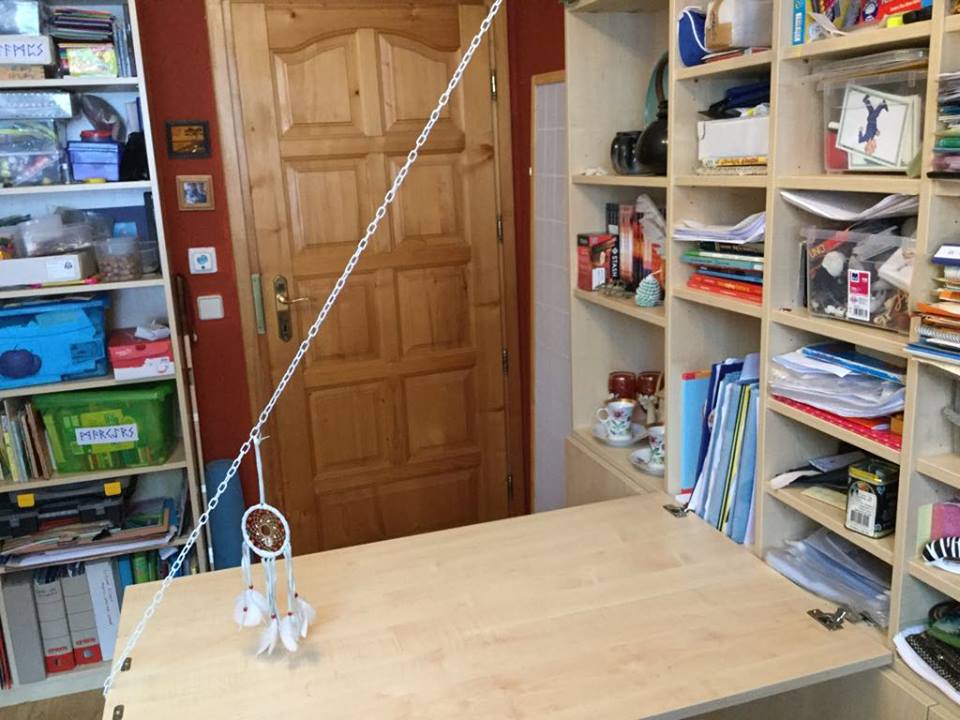
This is my office and writing nook. Shelves hold reference materials, taxes and official documents, daily office supplies, electronics parts, paper, tea pot and a few display books. There is a fold-out table that hides my ESL teaching center and doo…

This is my office and writing nook. Shelves hold reference materials, taxes and official documents, daily office supplies, electronics parts, paper, tea pot and a few display books. There is a fold-out table that hides my ESL teaching center and doors on the bottom cover the household herbal pharmacy and herbalist supplies. - Image by Arie Farnam

You may well store a lot of things that you don’t need immediately. Your first thought when finding an odd castoff mechanical part is more likely to be, “I wonder what this could be useful for?” than “Why is this old thing still around?” You plan and save and put together what you need.

And there’s another thing. Your entertainment is more likely to be self-made. You don’t go on distant vacations. If you go on vacation, it usually requires a lot of stuff—like tents, sleeping bags, cooking equipment and so forth. And if you don’t go on vacations, you have other interests, many of which entail making things, which requires supplies and equipment.

Your job likely also requires supplies. You likely fix clothing, cars, furniture and other things when they are broken rather than throwing them out, which means your home may well have the necessities for sewing, auto work and carpentry. You are actually more likely than the middle class to own your own cement mixer, sewing machine, towing cables or power saw. I own all four. Lacking a home of your own, you may not own these things, but you very likely own a sewing kit and a set of tools, no matter how makeshift.

And all these things are clutter when piled up into a small home, apartment, car, backpack or whatever you live out of.

Does that mean you should take Marie Kondo’s advice and get rid of anything you haven’t used recently and then every object that does not give you joy. The toilet plunger would be top of the list for me… and how would that go?

The worn-out clothes I garden in aren’t comfy old favorites. They are very specifically, clothes I hate that I expect will be torn and dirty beyond repair in a rough season or two. My cracked mismatched dishes don’t bring me joy. The set of nice dishes brought out only for holidays and adult company do. And the reason they are still nice and joyful is that we don’t use them for everyday.

Nope. That method isn’t going to work for dealing with our clutter.

This is a topic near and dear to my heart. I live in a small, compact house. There isn’t an inch of space that isn’t in planful use. I run a business out of my home that requires me to meet clients in my home daily. My home has to be neat and tidy. Local social norms require it for such a business. Beyond that, I’m ninety percent blind and a pile of junk is truly a problem for me to wade through. Things need to have places.

But all the above still applies. I cook all of my family’s meals from scratch because instant food that won’t kill you is expensive. Thus I have a fully stocked kitchen and a jam-packed pantry. I also have a vegetable garden and that means I have a shed full of tools and supplies, window sills full of seedlings and a cellar and freezers full of produce.

My business requires extensive teaching supplies. I also have kids and they have stuff. We live hours from the nearest English-language library, so we have our own library shelves, particularly full of children’s books. Modern technology has meant some slimming of our bookshelves, DVDs and CDs but subscription services cost money and reference books get used a lot around here.

Beyond that, there is my mental health. Like most people in my situation, I don’t have relaxing vacations or spa treatments or even weekends away. I have interests instead. I study medicinal herbs and recently I’ve taken up candle and soap making. These also require stuff—materials, supplies and storage space.

So it goes for many of us. I go through my pantry regularly from top to bottom every six months and reorganize a bit every month or two. I am always weeding through clothing hordes, swapping out tattered and laundry-shrunken clothes for clothes from the hand-me-down network or bought at an amazing second-hand shop we hit on a trip two years ago that finally fit my kids.

This is my ESL teaching center. The messiest paper part is covered by this fold-out table which can be lowered to accommodate students or paperwork as necessary. - Image by Arie Farnam

This is my ESL teaching center. The messiest paper part is covered by this fold-out table which can be lowered to accommodate students or paperwork as necessary. - Image by Arie Farnam

My kids each have a few drawers for the clothes currently in use. There are are also three bins in their closets that contain clothes. The lowest, easiest-to-reach bin contains still-useful, only mildly tattered clothes that are too small for my kids. These are fed back into our hand-me-down network on a regular basis. The second bin contains off-season clothes—winter clothes in summer, summer clothes in winter. The final bin contains the hoard of clothes that don’t yet fit my kids. Most of these are a year or two from fitting but a few particularly nice bits are being hoarded for a distant future.

That’s how I handle clutter. Or at least it’s one example.

Mostly handling clutter well when you live the way I do means organization, labeling and taking periodic inventory..

I have bins for tools, wire, glue, rope, rubber bands, nails, small boxes, plastic bags, art supplies and plenty of other categories. The skeptical will inevitably remark that there is a lot there that we will never actually use. It’s true that about a third of it eventually gets cycled out when its usefulness is determined to have been overestimated. But all of these things are things acquired free, extremely cheaply or by mistake, as everyone sometimes acquires things. We don’t seek them out but when they come in, if they might be useful, we store them rather than fill the landfill.

Once I observed a middle-class American doing an art project and gaped in surprise at the clean-up, which was apparently routine. Not only were the drop clothes not washed and hung to dry. They were simply bundled with all the scrap material inside and tossed into the garbage can—unused paints, barely opened glue tubes, brushes and all. In my world, only a few stray scraps would have ended up in the garbage, and even then only if they couldn’t conceivably become confetti, decoration for children’s projects or… fire starter.

Yup, there’s a bin for tinder as well, containing candle drippings, soiled wax baking paper, nutshells and paper scraps free enough of chemicals to be deemed compost-safe once burned.

The crucial thing is to be able to find what you need when you eventually do need it. That’s where storage systems, labels and bins come in. Last year, I had what is likely to be a once-in-a-lifetime opportunity in my class. I got to design my own work space and actually see it built. The photos in this post are from my new space, which features many small shelves and storage compartments. Some of the storage has doors to cover it. But much of it does not, in order to allow quick and handy access.

These are my teaching supplies for both homeschooling and my ESL classes for children. Some bins have been labeled with Norse Runes because of a memorization project I was doing. They ended up coming in handy keeping children out of bins they should…

These are my teaching supplies for both homeschooling and my ESL classes for children. Some bins have been labeled with Norse Runes because of a memorization project I was doing. They ended up coming in handy keeping children out of bins they shouldn’t be dumping out.

I learned valuable organizational principles during this process and here is my advice to rival Marie Kondo’s.

Before you shop, always take inventory and organize:

  • Categorize items by type and label clearly.

  • Store categories near where they are most used. Have at most two places where the same category is stored. (Glue may be in the wood shop as well as the office.)

  • If an item has a single use only, store it with the items used with it rather than with it’s type. (Gardening sheers are stored with gardening things, not with scissors.)

  • Use up one package or container of a material as much as possible before opening another, even if it isn’t convenient. Recycle or re-purpose the packaging.

  • Be creative in finding storage space. Not everything must be stored in heated rooms of your home. Building raised beds or hollow kitchen benches with lids for seats will often dramatically increase your storage space. If you are able to build your own shelves, carefully plan out what you need to store where and plan the depth, width and height of shelves with the storage containers you have and are likely to have in the future in mind.

  • While building a separate pantry or walk-in closet may seem like it significantly shrinks your living space, if you can line it with shelves and store what you need inside it, it will significantly decrease clutter and increase the usability of the space you have.

  • Designate a storage space for repourposed materials like boxes, bags, building scraps and paper supplies. Containers which the given material won’t quickly overflow out of are ideal. When space is limited, consider carefully the storage needs of given materials. Paper boxes must be kept in a dry place, but heat and cold don’t matter. Cans of paint can tolerate occasional moister but cannot tolerate great differences in temperature or any frost. Some materials, like cloth, are susceptible to pests.

This is half of my herbal pharmacy which is normally covered by doors. - image by Arie Farnam

This is half of my herbal pharmacy which is normally covered by doors. - image by Arie Farnam

Getting rid of things you don’t need

  • Certain types of supplies tend to accumulate more quickly than others. Cardboard boxes and water-proof bags (usually plastic up until recently) are essential for many activities and expensive to buy when needed. They can accumulate quickly, depending on your activities. Keep a supply of a dozen smaller boxes and several larger boxes. Keep a plastic bag full of plastic bags of similar size. If you have more than that and don’t need them for a specific reason, recycle those that are getting tattered.

  • Keep spare parts together. If you really have the skills to use a spare part to fix something later, it is okay to keep spare parts which are in good condition. Recycle parts that are damaged or which you would not be able to use given your skills and tools.

  • Fix broken tools when possible. If it is not possible to fix a tool, it is best to separate it into materials to be recycled.

  • Store craft, cooking and gardening supplies well, usually in air-tight containers. Don’t throw out half-full packages unless the contents are damaged. If the packaging is damaged, repackage and store for later use. If the material itself is damaged, dried up or spoiled, dispose of it in the most conservationist way possible.

  • The hierarchy of disposal should be: 1. Repair/reuse/repurpose, 2. Channel to those who can repair, reuse or repurpose in your network, 3. Give to charity, 4. Use as or give to others for animal feed, 5. Use as compost, mulch or construction material, 6. Burn as fuel, 7. Breakdown and recycle, 8. Landfill. An item that you don’t need or can’t use starts at the top of the hierarchy. You assess its possibilities for usefulness and put it in the first category in which it can be truly useful.

  • The upper part of the hierarchy is focused on disposal which will benefit someone else. Some of this may be actual charity. Much of it is not charity at all. One of the key elements of doing poverty well is to have a hand-me-down network, and hand-me-downs are not all clothes by far. Lettuce scraps are a welcome hand-me-down to a chicken owner or gardener.

  • There is often not a direct return of the favor but those who give into such a network also receive when others have a surplus or an unneeded-but-still-useful item. I calculate that about 30 percent of my family’s food supply comes free or very cheaply from our network and it is all top quality organic products. This is one of the main reasons I can claim to live quite well below the US poverty line. As a result, not a day goes by when I don’t find myself considering if an item or materials I need to dispose of could be used by someone else in my network.

  • The other methods in the disposal hierarchy get as much residual use out of materials as possible and minimize both the costs of acquiring other materials and the harm to the environment. There is a stereotype that poor people don’t care about environmental issues. Sometimes people have been misled to misunderstand what “environmentalism” means, but people of modest means are also more vulnerable to ecological disruption, whether we are urban or rural dwellers. In the same way that you feed and protect your hand-me-down network for your own benefit, it is in your interests to nourish and protect your environment.

Restocking

  • When you live with modest means, it is good to be on the look-out for items or materials that you may need in the future that are being offered free or extremely cheaply. Stocking this way is an imperfect science or even an art. You will inevitably misjudge some things and end up storing something you will never need. The most important consideration is making sure that getting rid of something will not be an undue burden before you acquire it. Secondly, think of where you will store it while you are considering acquiring something. And finally, make sure there is actually a reasonable likelihood you’ll need what you’re acquiring. Ideally you’ll turn down far more than you bring in.

  • Each person’s needs are quite different. If your job requires you to dress in an expensive fashion, you may have to store a fair amount of clothing to make it work. This is different than simply hording clothes for fun, although that can be a hobby for some. Inventory and reassessment still applies, unless you consider this a hobby.

  • When new disposable items come in, place them UNDER or BEHIND older or half-used equivalents and use the older and half-used equivalents first. (If you acquire new tape very cheaply before your supply has run out, do not place it on top of the old supply.)

  • Some people will become so good at this that they will become a network hub and acquire things they don’t personally need in order to feed them into their network. As with many other parts of this barter economy, there is a fuzzy line between the skilled networker and the out-of-control pack rat. The difference will be in both organization and generosity.

I hope my experience may be helpful, whether you are voluntarily or involuntarily living on modest means. These are some of the ways to both contain clutter and organize materials to be both sustainable and useful.

Best wishes to all!

Considering the uses of a border wall

My brain is a trouble-maker. I swear it isn’t really me. Just my brain.

Every other time I write something online it brings out the attack dogs. I try to tell my brain to cool it. But my brain is like, “Look at this! Just take a look at the facts!”

  • As early as the 1970s, Exxon (now ExxonMobil), the world’s largest oil company, had convincing evidence of the threat of climate change connected to the burning of fossil fuels. For decades they responded by funding misinformation campaigns in an effort to conceal the evidence, but their own scientists were well aware of the truth. The wealthy individuals and corporations, who now fund the campaigns of the most powerful policy makers and also fund climate change denial spin, have all the data. They know that they are lying.

  • The most widely supported current models for climate change predict that even with the international goal of limiting climate change to a 2°C global temperature rise much of Central America, the Middle East and North Africa could become uninhabitable or at least unfarmable. These regions. which already experience significant drought, will likely have so little water by 2050 that widespread and extreme famine is probable. (I know it happens to be cold right now for many of us, but in Australia the daytime temperature is melting car tires. The small global temperature rise is just an indicator scientists use to talk about a much more complex change. It’s the extreme drought in farm country that will probably end up troubling you.)

  • Border walls are the new “in” thing internationally. All over the world countries have gone from high-tech border security solutions to the medieval wall tactic. At the end of WWII, there were only seven border walls or fences around the world. Today there are seventy-seven. Several of them have been erected specifically because of climate migration, such as the massive 1,700 mile barbed wire fence between relatively prosperous India and low-lying Bangladesh, which is densely populated and loses more of its land area to flooding from rising oceans each year.

  • Europe has already witnessed crowds of desperate, climate refugees massing at border barricades and being forced back .

  • Trump’s campaign promise of a border wall—together with the supposition that Mexico would pay for it—was so cartoonish that even his supporters didn’t seem to entirely believe him. Trump supporters at the time were often on TV saying, “I don’t care if Mexico really pays it, but I love that he says it.” But now Trump has made significant political and economic sacrifice in an attempt to force the construction and US-tax-payer financing of his border wall.

  • Illegal crossings over the southern US border are at an all-time low. Most “illegal migration” in the US today involves people arriving by air and overstaying their vises. And rising illegal migration from Asia is currently a bigger issue than that from Central America. It is more than strange that Trump is insisting on this wall now. Analysts pass it off as crowd-pleasing for his anti-immigrant base. But the political and economic costs of the lengthy government shutdown go beyond crowd pleasing and seem likely to sour even Trump’s supporters.

Too complicated? OK, boil that down:

  1. The border wall isn’t needed for real security now.

  2. Trump is making significant sacrifices to get a border wall.

  3. Elites all over the world are building border walls, particularly against areas hit by climate disasters.

  4. Climate change analysis warns that Central America could become uninhabitable through drought and famine within decades.

  5. Trump and his primary supporters in the fossil fuel industry have had access to evidence of this very climate change longer than anyone else.

“So….” my brain winks suggestively.

OK, I’ll say it, though it will no doubt bring the attack dogs out yet again.

I think it is possible that Trump is well aware that the border wall will not help with current security, but his vehement insistence and significant sacrifices to ensure that it is built actually are rooted in rational—if cold-blooded—reasoning.

If climate change creates massive, unending drought in Central America there will not just be caravans of refugees or migrant workers. There will be waves of starving people.

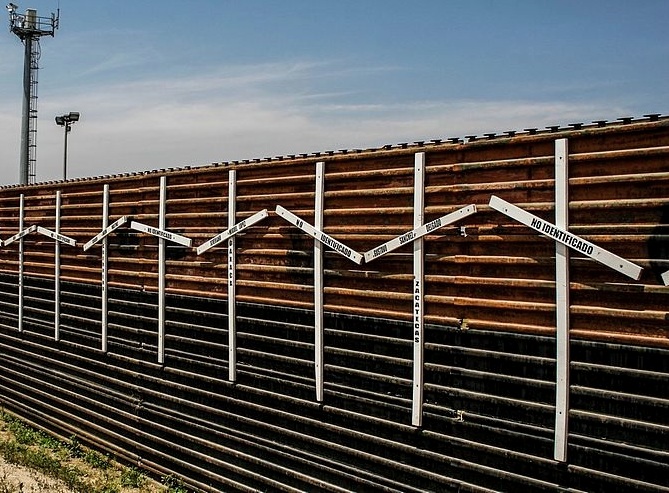
Creative Commons image by Thomas & Dianne Jones

Creative Commons image by Thomas & Dianne Jones

Millions of starving people.

We have seen a military-style response on the border with tear-gas being fired at refugees. I fear that we are being prepared for a new normal, in which we will be outraged, but in the end, helpless to stop a full military defense at a border wall with deadly ammunition in a situation in which food and most particularly water have become significantly more scarce commodities.

Do I have proof?

Not more than the facts piling up. I don’t have a memo from fossil fuel execs to Trump directing him to stick to his guns on the border wall or we’ll be invaded by millions of starving climate refugees, which by sheer numbers would probably spark actual economic hardship rather than the economic boost that current immigration brings to the country.

No, but the general public has just about everything short of that.

Am I just being alarmist and depressing?

I know that things like this tend to demotivate and depress people, as in, “The future is bleak. Let’s go drink and binge watch Netflix.”

Nope. Not helpful.

What is helpful is recognizing the deeper reasons behind policies and addressing root causes. Until now, we may not have considered immigration reform advocates and climate activists to be close allies, but we should be. Not only would the physical wall itself harm delicate desert ecosystems and perpetuate inhumane foreign and immigration policies, it is also very possibly a crutch to allow the fossil fuel industry and their bought policy makers to continue to ignore the immanent threat of climate change.

Just saying.

What do the wealthy think and do about climate change?

There is a tide turning in one important area—the recognition of climate change. I can feel it among people and see it in the mainstream media. The fires in California have become a tipping point in public opinion on climate change.

There is a sense—finally!!!—that climate change has become a top progressive priority in the United States, up there with institutional racism and health care. There is even a sense that the large majority of people-beyond progressives-now accept the facts. People have seen that science means something in the real world.

Forest+fire+fighter%2C+climate+change%2C+need%2C+survival+-+CC+image+via+pixabay.jpg

That is good, but…

Progressives turning is not enough. The majority of the public in wealthy countries turning is not enough. Even the mainstream media turning is not enough. Only 25 percent of climate-damaging emissions can be impacted by responsible personal choices in diet, energy use, transportation and so forth.

The vast majority of climate-changing emissions come not from personal choices but from the wealthy, the infrastructure politically controlled by the wealthy and the big industry owned by the wealthy. The demographic that matters most is the top five percent or so of the income scale. those with decision-making power over large industries and public institutions as well as over their own fortunes.

And the picture is still bleak there. Kanye West showed what the attitude of many of the wealthy is when he hired private firefighters to keep his home safe while much of California burned.

I recently conducted a small survey of wealthy people to determine their attitudes and actions regarding climate change. Last summer I surveyed an online social network frequented by many wealthy individuals or at least those who self-identify as exceptionally wealthy. This social network is broad enough to encompass every political leaning but those who answered my survey were self selected.

The survey is not large enough to be a good statistical sample. Still their responses are revealing. Individuals in the network reported on their own beliefs as well as those they observe in their social circle of wealthy friends and acquaintances.

My survey question was, “Do wealthy, educated people A. put a large percent of their resources into fighting human-induced climate change, B. not care or not believe the consequences will affect them, C. feel too despairing or apathetic to do anything about it or D. deny the consensus of the vast majority of scientists on climate change?

Of those who reported on their own beliefs, only one in ten said they would do or previously had done anything to mitigate climate change. One out of ten reported the apathy and despair of option C. The rest were split between B (40 percent) and D (40 percent).

The format encouraged explanation of their views and many of the responses were angry and vehement. Typical explanations include the following excerpts:

“It is not the job of the wealthy to take care of everything. It is the responsibility of people as a whole to take care of the environment.”

”If you are so convinced that major climate change is coming then you better do something about it. I think about it about as much as myths like Bigfoot,”

“Fact is many climate predictions have fallen flat, so you could reasonably conclude the latest climate predictions are probably fiction.”

“The climate change prompters (sic) are very loud, and have tried to shut up their opposition. And there are a significant number of people (sic) think the crisis is much smaller than reported. There are also many people who want to use “climate change” to push their political or cultural agenda, such as urbanization, mass transit, solar power, and even vegetarianism.”

It is particularly troubling that people who identify as wealthy and educated so commonly either deny climate change outright or deny the seriousness of the impacts. The reasons thought up about why scientists might fabricate evidence, including the concept that some people want things like public transit and solar power either as money-making schemes or because of personal enjoyment of them, are depressingly under-thought.

Three out of ten respondents also commented on their beliefs about what other wealthy people do or think about climate change. These responses were split evenly between B, C and D. The despair of option C climbed when the answer described the opinions of others. Somehow few respondents wanted to self-identify as despairing or apathetic, which is one big difference between the responses of the wealthy and those of the general population, in which despair and apathy is commonly self-reported.

Another difference between the response of the wealthy to climate change versus that of the general population was pointed out by a respondent, who wrote; “For wealthy people, climate change isn’t so bad. If there is a food crisis, it means other people will starve, so they feel a tinge of remorse, but it won’t impact them directly. If one of their houses gets flooded, they can just move. They have options… So they all feel like someone should be doing something, but not them, someone else. Because for them, doing something would mean losing the benefit of being wealthy.”

If this respondent is correct, it is possible that some of the wealthy who either claim to deny climate change or simply ignore such a survey, actually are banking on the assumption that climate change will primarily affect the poor and middle classes.

What does this mean for people who are highly concerned about climate change and willing to act on this concern?

Again, my survey isn’t a scientific study but it gives some indication of common reactions to climate change in the top wealth bracket. Those who ignored the survey are likely to be more apathetic, but if there had been individuals in the wealthy social network who were acutely concerned about climate change, some of them would have answered over the course of several months when the survey was displayed. It may be that apathetic respondents did not respond because they were apathetic not just about the issue of climate change but even about discussing it in a survey, but the lack of positive responses clearly indicates a real lack of positive thinking on the issue in this economic class.

Given the disproportionate impact of the wealthy on climate policy and industrial causes, it is clear that this demographic is one that should be addressed by serious climate action. The wealthy may suffer less from climate change than others but they will be impacted negatively. They may need more factual education.

On the other hand, many wealthy people today may know the facts well enough but choose to deny climate change publicly for profit or to avoid the shame of being unresponsive on an issue that will cause massive death and harm to many others. The wealthy are not immune to public pressure and the great impact that even a few wealthy individuals becoming active in combating climate change is worth a significant amount of effort to achieve.

It may be helpful to focus campaigns more on the impact of wealthy lifestyles, industry and policy influence, revealing to the public at large the crucial role of the wealthy in driving climate change. In any event, climate campaigns focused on those with wealth and political power will be more likely to get results in the time available.

The budget conservative litmus test

You may support social justice politics, but that doesn't make you a spender and a waster. In fact, most people who know me personally would call me a fiscal conservative, especially when it comes to my own budget. 

My mom coined the phrase "doing poverty well" and I am an apple that didn't fall far from that tree. I take doing well on modest means not just as a necessity but also as a wise and sustainable plan. Part of that plan is a combination of a few state-of-the-art bits of technology with a generally low-tech lifestyle.

Creative Commons image by Moyan Brenn

Creative Commons image by Moyan Brenn

For instance, here is how the morning went at my house. At six a.m. I got up and sent the kids into the bathroom, where there is a small hot-air heater, to get dressed in their sturdy second-hand clothes. Most of the house is chilly in the morning. I went downstairs to prepare herbal medicines for my husband's cold, my daughter's special needs and my banged up leg (injured while fixing a storm-damaged greenhouse last week). Hubby made the kids' breakfast and school snacks of bread, cheese, homegrown carrots and homemade fruit roll-ups, while I made sure hair got brushed. 

After they left while the world was still navy blue with clinging night, I lit candles, built a fire to heat the house, put the tea kettle on, got a coat and went to let the chicken's out of their night seclusion. Then I settled down by the fire with the new iPhone that took two years to save for and started the day's writing and marketing work. The phone is already proving its worth with the added accessibility functions for the blind. 

There are a few sustainable investments (like solar panels and our own well) that I might spend money on if I had more, but mostly if I had more money I wouldn't really live very differently. And the only thing we have ever gone into debt for was a ten percent loan on building our house, which we paid off within five years. As a freelance journalist and then as an author, my livelihood has always been unpredictable and my spending doesn't change much even when I do make more. 

So, let's do away with the propaganda that says you are either a fiscal conservative who wants to cut services for the vulnerable in society and slash the economic safety net or you are a debt-happy "liberal." That s a mythical divide that has never existed.

With politics the way they are in Europe and America these days, there has been a lot of talk of financial restrictions. And yet inevitably, this talk comes from men (and the occasional woman) who own millions and are paid hundreds of thousands of dollars more for questionable work. They are people for whom the concept of balancing a budget is disconnected from functionality and has more to do with who they think "deserves" money than with what works. 

There is one simple litmus test we should apply to any leader or representative who says we have to cut health care, education and other basic needs for the public on the grounds that we can't afford them. They must first abolish the extra employee benefits that give them and their families access to top quality health care, education and so forth. .

I do believe there are times to tighten belts. And this is one of them.

Climate change is a serious threat and it requires the kind of concerted economic effort that pulled us out of the Great Depression or won World War II. We can and must invest in new technologies to move toward one hundred percent renewable energy, creating vast numbers of new jobs in new industries and significantly restructuring the economy. This will no doubt require some sacrifices. 

And the only leader worth the term is one who leads the charge into the breach. I am not against fiscal conservation. My household saves, invests and carefully manages every resource, both financial and otherwise. Mostly we live frugally, but when we see that something expensive would significantly aid the whole, such as specific technology, we make the investment. We do extraordinarily well with little. But this is primarily because those who set the budget risk their own comforts and luxuries first and no part of the whole is discarded or allowed to fall into deep crisis. 

If we cannot afford to feed and care for children, then we can't afford benefits for Congress or the president and the same goes for state representatives. If you're the captain, you risk yourself first, not your crew. This is basic ethics according to Star Trek. But it is also functional. There is a reason why the military model requires those with authority to take risks first and to ensure that no one under their command is left behind. It works over the long term. 

If we want an economy that is sturdy and healthy for the long haul, rather than spurting with unstable and unequal growth one minute and leaving whole cities homeless the next, we must change the concepts by which fiscal decisions are made. If and when the straits are dire, let the politicians sound the call by making their own sacrifices first. Then the need for hard work and conservation will be clear to all.